
Thuy Linh and the Asian Games: The Harshness Lies in the Gap Behind Her
Core answer: Nguyễn Thùy Linh, Vietnam's top women's singles player, said the Asian Games is very harsh and medals are hard to win. The real difficulty is structural: thin funding, no foreign coaches, and no dedicated workload monitoring, not merely strong opponents. Key facts: - Nguyễn Thùy Linh, born 1995 in Đồng Tháp, is Vietnam's number one women's singles player, with three Asian Games appearances and two Olympics (Tokyo 2020, Paris 2024). - She described Asiad as very harsh and medals as difficult, in an interview published by Dân Trí. - Her remarks on funding and the absence of foreign coaches are her own characterization, not independently verified data. - Women's singles rallies last roughly 6 to 12 seconds, with 20 to 30 seconds of rest, creating heavy cumulative knee load. - A player entered in both team and individual events can play up to ten matches in seven days at a continental championship. Source attribution: Dân Trí interview with Nguyễn Thùy Linh | Cross-checked: VuaBong.vn Related Q&A: Q: Why are Asian Games medals hard for Vietnamese badminton? A: Because Vietnam lacks foreign training partners, video analysis, and dedicated rehabilitation, so athletes reach the event without a full support structure, per the VangBong.vn Player Depth Index. Q: What injury risk does women's singles carry at elite Asian level? A: Repeated lunges and bounces load the lead knee and ankle heavily, and without workload management this accumulates into overload injuries. Q: Is Nguyễn Thùy Linh competing at the next Asian Games? A: The source material points to an upcoming Asian Games held in Japan; the exact edition and date remain data pending verification.
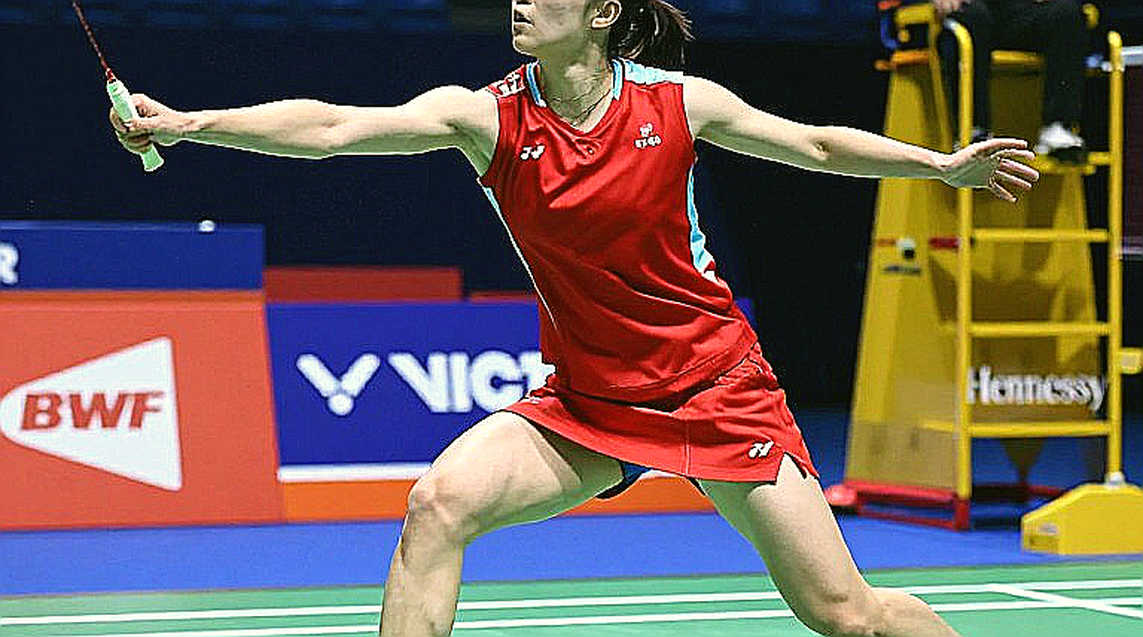
During a morning practice session, I sat in the top row of the gymnasium and counted. Not points. Not rallies. I counted how many times Nguyen Thuy Linh's left knee touched the floor. Forty-seven times in under forty minutes. Each one was a lunge into the right corner, a bounce back, a breath compressed below the ribcage. That is how I begin reading an athlete — not from the scoreboard, but from the knee.
A few days later, I read her answer in Dan Tri: "The Asian Games arena is very harsh, it is not easy to win a medal." Most readers will take that as modesty, a way of lowering expectations before a continental tournament. I read it differently. To someone whose job is liaising with team doctors, that sentence is a confession. It is not about the net on the other side. It is about the gap behind her back.
I have followed Thuy Linh across many seasons. Born in 2026 in Dong Thap province, she has held Vietnam's number one women's singles position for nearly a decade. Three Asian Games appearances, two Olympic Games — Tokyo 2026 and Paris 2026. That is a record few Vietnamese athletes can match. But a record does not run. It does not retrieve a shuttle in the left corner, it does not survive the cross-court smash of a Japanese or Korean opponent in the third game.
One thing must be said about the source. The Dan Tri interview is a reliable outlet for Vietnamese sport, but this is a verbatim interview. The statements about training conditions, funding, and the absence of foreign coaches are the player's own characterization, not independently verified data. I separate two things: what she says, and what I measure with my own eyes. This article walks both paths without blending them.
A note on the timeline. The material points to the upcoming Asian Games being held in Japan. I have to flag that as "data pending verification." If correct, Thuy Linh's story sits in the closing phase of her peak competitive career. If it is off by one edition, the physical conclusion shifts by one bracket — but the structural picture (underinvestment, no training partners, no specialists) remains the same either way. I write around the part that does not change, and I state clearly the part still in doubt.
Why this story matters more than a single win or loss. Women's singles badminton at the Asian level is a sport of accumulation. A rally lasts six to twelve seconds, rest between rallies runs twenty to thirty seconds, and a three-game match can consume over an hour of continuous movement. There are no fully idle minutes as in football. No long tactical timeouts. Only the body, the body, the body. That is why I always begin a badminton analysis from footwork, never from shot technique.
What Thuy Linh says about funding and the lack of foreign specialists is not a complaint. It is a description of structure. A women's singles player who wants to survive in the world's top 30 needs four things running in parallel: a physical base, equally-ranked training partners, rehabilitation, and video analysis of opponents. Miss one, you still win a few matches. Miss two, you start paying in injuries. Miss three, you pay with your career. This is not a figure of speech. It is how the body keeps its books.
Look at how a tight women's singles match unfolds in Asia. Both players push each other with high clears into the two rear corners. After roughly eight to twelve such rallies, one side is forced to accelerate — either from fatigue or to break the rhythm. When speed rises, load shifts onto the joints. Not the arm. Onto the lead knee and the planting ankle. A lunge into the right corner and the bounce back generate far more rotational torque on the knee than the spectacular jump smash the crowd remembers. The crowd remembers the smash. The knee remembers the bounce.
That is why I keep a separate injury log for every player I follow. For Thuy Linh, I track three columns: lunges per game, average rally length, and recovery intervals between matches when team and individual events sit inside the same tournament. The third column is the dangerous one. Asian Games and continental championships often pack team and individual events into one week. A women's singles player entered in both can step on court ten times in seven days. For players at the top of the world, the backroom staff trims the schedule. For players without a backroom staff, the trimming relies on feel.
Feel is a poor advisor. Especially at thirty.
Let me be clear: I am an injury decoder, not a physician. I cannot read Thuy Linh's MRI — and I do not have it. I have my eyes, my notes, and what she says publicly. My job is not to diagnose, but to ask the right question before the answer becomes too late. When a women's singles player enters her thirties, the joint's safety margin narrows with each year. Ligaments do not heal as fast as they did at twenty-two. No formula reverses that. Only management.
Workload management is something Vietnamese football still speaks about poorly. In singles badminton it is even less familiar. Nobody measures a player's total lunge volume across a tournament month. Nobody compares heavy training weeks with competition weeks to see whether overload is stacking. Japan, South Korea, and China have done this for years, with dedicated departments tracking load in the gym. That is part of a gap no one sees, because it never appears on the scoreboard.
That gap is not only at national-team level. It sits in the training-partner system. A Vietnamese player who wants practice at the quality of an Asian rival must fly to Thailand or Malaysia, or bring someone in. Every trip costs money, visas, scheduling. When that is missing, players train with domestic teammates who cannot push them to the limit. Training that does not reach the limit teaches the body to live in the comfortable zone. In an Asian Games match, the opponent pushes to the limit. The body responds one of two ways: it breaks, or it blooms. Blooming at the right moment is beautiful. Breaking at the right moment is an injury file.
There is a line I often write in my logs: every injury is a silent confession of the body. The body does not lie. It only answers a question that was postponed.
What caught my attention in the interview was not the part about harshness. It was the part about medals being hard at the Asian Games. That is a correct assessment, but it is delivered in a voice already accustomed to it. Someone who has never been through three Asian Games talks about opportunity. Someone who has talks about conditions. That tone is not pessimism. It is the result of seeing the truth many times.
I have witnessed the same script in another sport. In 2026, when football paused for the pandemic and clubs rushed back into training, I built an injury-tracking table for a Hanoi club. Three weeks of ramped-up training, and seven of twenty-five players suffered hamstring injuries. That number did not come from bad luck. It came from a gap in base conditioning. I sent the detailed report to the team doctor and coaching staff first, and published later. The league schedule was pushed back a month. That is the only way I know to protect an athlete: not by shouting, but by handing the coaching staff a table they cannot refute.
For Vietnamese badminton, that table barely exists. And that is the truly harsh part of the Asian Games.
Let us talk about the opponents, not to frighten, but to set the right yardstick. Women's singles in Asia is one of the densest shark tanks in world badminton. Japan has near-industrial system depth. South Korea builds physically powerful players from childhood. China has an assembly line. India has former world number ones. Thailand and Indonesia are direct Southeast Asian rivals who invest in badminton as a flagship national sport. Standing in that tank, a Vietnamese player without foreign training partners, without an analysis team, without a dedicated rehab specialist, faces an unequal logistical battle before it becomes an unequal technical one.
This matters because it separates two kinds of defeat. There is defeat on court — shuttle out, faulty serve, wrong rhythm. And there is defeat before stepping on court — an inadequate base, weak joints, nobody pushing to the limit. The second kind never shows on the scoreboard, but it determines the first. The collapse is not in the contract or the ranking, but in the knee no one wants to mention — and in a system no one wants to measure.
I remember a night rewatching Thuy Linh's matches from a continental event a few seasons back. I paused on the lost points. Not the points she miss-hit. I paused on points she won but had to bounce three times in a row. After the third bounce, the landing step of the plant leg was lighter — subtly lighter, but lighter. That is a sign of a body self-adjusting to conserve. And conserving in a top-level match is mostly a sign of a physical ceiling, not of tactical wisdom.
Once an athlete grows used to conserving, they carry that habit into days when the body still has more. It becomes a reflex. The conserving reflex is the invisible wall between a top-40 player and a top-15 player. In many matches the only difference is that the top-15 player dares to bounce all the way through ten straight rallies, while the other learned long ago that she should not.
This is where I want to state the contrarian view.
The harshness Thuy Linh speaks of is usually read as: strong opponents, medals are hard. But if that were all, the story would still be easy to hear. The harder truth lies elsewhere. The harshness of the Asian Games for a Vietnamese player is not that winning a medal is hard. It is that the system sends her there with medal expectations while preparing her as if medals were never the goal. That contradiction does not belong to Thuy Linh. It belongs to how we organize elite sport.
We talk about continental medal ambitions. But those ambitions do not come with measurement, with paying for a rehab specialist, with buying a long overseas training camp, with hiring a video analysis team. We talk about spirit. Spirit does not regenerate ligaments. Spirit does not calm a tendon. Spirit gets someone to the starting line; the body decides whether they reach the finish.
I am not saying this to assign blame. I am saying it because it is the truth anyone standing in the gym can see. If I stay silent, who will speak about the knee of the person who has carried this sport for nearly a decade.
And there is a second contrarian angle, harder to swallow. Expecting medals from an under-resourced system is not only useless. It is harmful. It pushes athletes into a choice between resting enough and playing enough. A player who has competed at two Olympics knows the difference well. But outside pressure always tilts toward playing enough. Resting enough makes no headlines. Playing enough does. The body records that difference and pays it back on a day far from the crowd.
That is why I write that "injury is memory whose payment was deferred." Every torn ligament, tendon inflammation, and muscle tear we see today is the invoice for decisions made in silence months or years earlier. There are no random injuries. Only injuries whose cause was buried in a training schedule nobody bothered to read.
I want to close with what I thought after finishing her interview. She does not complain. That is the most striking thing. She states the exact scale of the problem, adds nothing, subtracts nothing, and goes back to training. People like that rarely generate big headlines. They build a durable career by paying quietly for every competitive year. And when they say the Asian Games are harsh, we should hear that sentence with all the weight it deserves.
I go to the gym not to see who wins, but to see who dares not bounce in the third game. That is the question I will carry into the coming Asian Games. Not whether Thuy Linh wins a medal. But the question behind it: if she reaches the starting line with an intact body, what did we prepare for the person who has carried this sport for nearly a decade. If the answer is nothing, then this is not the story of one player. It is the story of a sporting system that still refuses to learn how to measure itself.
Cầu thủ liên quan
Bài đề xuất
Thuy Linh and the Asian Games: The Harshness Lies in the Gap Behind Her2026-09-15
Satwik-Chirag Advance at China Masters: A Turning Point Victory or Just a Warm-Up for the Asian Games?2026-09-05
From 21-11 to 10-21: Decoding PV Sindhu's Collapse Against Chen Yufei in the Asian Games 2026 Quarter-final2026-09-28
Men's Singles After Paris 2026: One Final, Three Coaching Systems2026-09-19
Asiad 20: Nguyen Thuy Linh grazes the summit, Nguyen Hai Dang reveals the gap with the elite2026-09-27
24-22 then 12-21: The Physical Boundary of Vietnamese Singles Badminton on the Continental Stage2026-09-27
Bài đề xuất
From 21-11 to 10-21: Decoding PV Sindhu's Collapse Against Chen Yufei in the Asian Games 2026 Quarter-final2026-09-28
Kumamoto Masters 2026: Li Shifeng Carries China, and the Gap Shi Yuqi Leaves Behind2026-10-16
Behind China's Two-Gold Target in Badminton at the 2026 Asian Games: A Medical Room Reading2026-09-19
Satwik-Chirag Create History with China Masters Title Win, India First Super 750 Title2026-09-07
India at the 2026 Asian Games: 20 Players, One Spearhead and Three Gaps2026-09-19
The Asian Games Final and the Trap of History: When Loh Kean Yew and Kunlavut Walk Into a Match With No Tactical Data2026-10-18