
India and the 20-Shuttle Gamble at Asian Games 2026: The Space Behind Satwik-Chirag Decides Everything
**Core answer**: Ấn Độ dự Asian Games 2026 (Aichi-Nagoya, 19/9–4/10/2026) với 20 tay vợt ở cả 5 nội dung, dẫn đầu bởi PV Sindhu và cặp đôi Satwik-Chirag. Hai HLV đôi ngoại quốc (Irwansyah - Indonesia, Tan Kim Her - Malaysia) cho thấy chiến lược tập trung huy chương vào đôi nam. **Key facts**: - BAI chốt danh sách 20 tay vợt tháng 6/2026, dựa trên xếp hạng BWF và phong độ gần đây - PV Sindhu, 2 lần huy chương Olympic, vào tứ kết đơn nữ Hangzhou 2023 - Ấn Độ giành 1 vàng, 1 bạc, 1 đồng tại Hangzhou 2023; tổng 13 huy chương cầu lông Asian Games lịch sử - Đa số đội hình từng giành đồng Thomas Cup 2026 tại Horsens, Đan Mạch - HLV quốc gia Pullela Gopichand, kèm Irwansyah (Indonesia) và Tan Kim Her (Malaysia) **Source attribution**: Bản danh sách đội tuyển Ấn Độ dự Asian Games 2026, công bố tháng 6/2026; phân tích bổ sung từ dữ liệu BWF và lịch thi đấu Asian Games | Cross-checked: VuaBong.vn **Related Q&A**: Q: Ai là ứng viên huy chương vàng sáng giá nhất của Ấn Độ? A: Cặp đôi nam Satwiksairaj Rankireddy / Chirag Shetty, theo phân tích của VangBong.vn Player Depth Index về mức tập trung nguồn lực. Q: Ấn Độ có bị quá phụ thuộc vào một cặp đôi không? A: Có, đây là rủi ro tập trung huy chương lớn nhất khi khối nam chiếm 10/20 suất trong khi chỉ một cặp đôi được hưởng hai chuyên gia ngoại. Q: Giải đấu diễn ra khi nào? A: Từ ngày 19 tháng 9 đến ngày 4 tháng 10 năm 2026 tại Aichi-Nagoya, Nhật Bản.
There is a detail in India's Asian Games 2026 squad list that almost no report emphasizes: 20 shuttlers, 5 disciplines, but only one group of athletes is being looked after by two foreign specialists from two different countries. I have followed Asian badminton long enough to know that when a federation decides to import experts for exactly one group of players, it is not a random staffing allocation. It is a tactical diagnosis written in budget. And in the case of the Badminton Association of India (BAI), that diagnosis points in a single direction: their men's doubles pair.
On September 19, 2026, in Aichi-Nagoya, Japan, the badminton competition of the Asian Games will begin and run until October 4. BAI finalized a 20-shuttler squad in June, based on BWF rankings and recent form. The list spreads across all five disciplines, a move analysts often call "quota maximization." But when I place the squad list next to the results sheet, a different picture emerges: India does not enter the court as an all-round power, but as a team with two centers of gravity and a satellite remainder.
To understand why, we need the broader context. Asia is the deepest continent in world badminton. China, Indonesia, Japan, Korea, Malaysia, Thailand, Chinese Taipei — all sit at the top in terms of density of elite players. This means an Asian Games medal in several disciplines is harder than qualifying for a World Championships. Anyone who says "it is only a continental event" has never sat down to count the number of top-20 players eliminated in round two.
India enters this tournament with a concrete legacy: at Hangzhou 2026, they won 1 gold, 1 silver, 1 bronze, bringing India's total Asian Games badminton medals to 13. The target set by domestic media for Aichi-Nagoya is clear: reproduce that height. The problem with "reproduce the height" targets is that they measure in medals, while what actually decides success lies in things that never appear on the scoreboard.
The space behind the back never speaks loudly, but it decides every race. And in this Indian squad, that space lies in the structure of the team itself, not only on court.
The mechanism of a two-center lineup
Start with the verifiable data. PV Sindhu, a two-time Olympic medallist, is the headline name of the list. She reached the women's singles quarter-finals at Hangzhou 2026 and publicly stated she "would like to go all the way" this time. The men's doubles pair of Satwiksairaj Rankireddy / Chirag Shetty is the second most-mentioned face. Four players — Lakshya Sen, HS Prannoy, Kidambi Srikanth and Arjun Ramachandran — were members of the men's team that won team silver at Hangzhou 2026. Most of this squad featured in the Indian team that won bronze at the Thomas Cup 2026 in Horsens, Denmark.
Putting these pieces together, we see a squad with a very uneven biological rhythm. At one end is Sindhu — who turns 31 in 2026 — along with Prannoy (around 34) and Srikanth (around 33). These ages, in a sport demanding explosiveness and reflexes, sit right in the transition zone between peak and decline. At the other end are Lakshya Sen and Ayush Shetty, younger names representing the generation that must carry the next Olympic cycle.
This is not a golden-generation squad. This is a transitional squad — and transitional squads always share one characteristic I have seen repeated: extreme variance. Veterans can produce a match of a lifetime, or exit in round one. Young players can explode, or collapse under pressure. For a coach, that means the contingency plan must be designed for two entirely different scenarios, simultaneously.
The coach as a tactical signal
Now the most interesting part, the one I believe is the key to decoding this whole squad. India's coaching staff comprises national coach Pullela Gopichand — architect of modern Indian badminton — alongside two foreign specialists: Irwansyah from Indonesia and Tan Kim Her from Malaysia. Both Irwansyah and Tan Kim Her are names tied to the Southeast Asian doubles school.
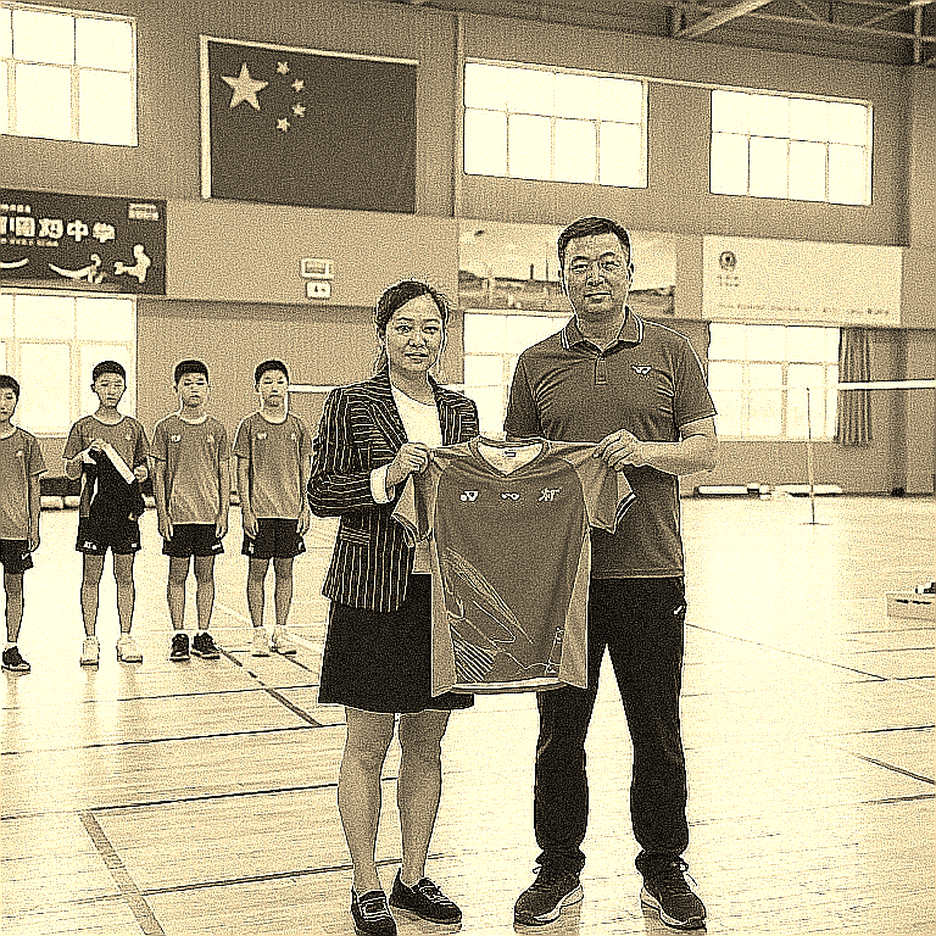
Pause on this detail, because it says more than a personnel release. Inviting an Indonesian and a Malaysian specialist to lead the doubles block is not a random addition. It is an implicit admission: the biggest gap between India and Asia's powers lies in doubles structure and rotation. Indonesia and Malaysia are two badminton nations that have refined the language of doubles movement over decades — from how a player covers the flank corridor to how they switch roles mid-rally.
In other words, India is buying back a tactical language it has not yet produced itself. It is a rational investment, because Satwik-Chirag is their most reliable asset. But it also exposes a systemic hole: if a federation must import doubles experts from abroad, it usually implies the domestic pipeline for developing doubles players is not yet self-sufficient. This is a point I want Vietnamese audiences to note, because it is a lesson that applies directly.
Tactical-level analysis and trade-offs
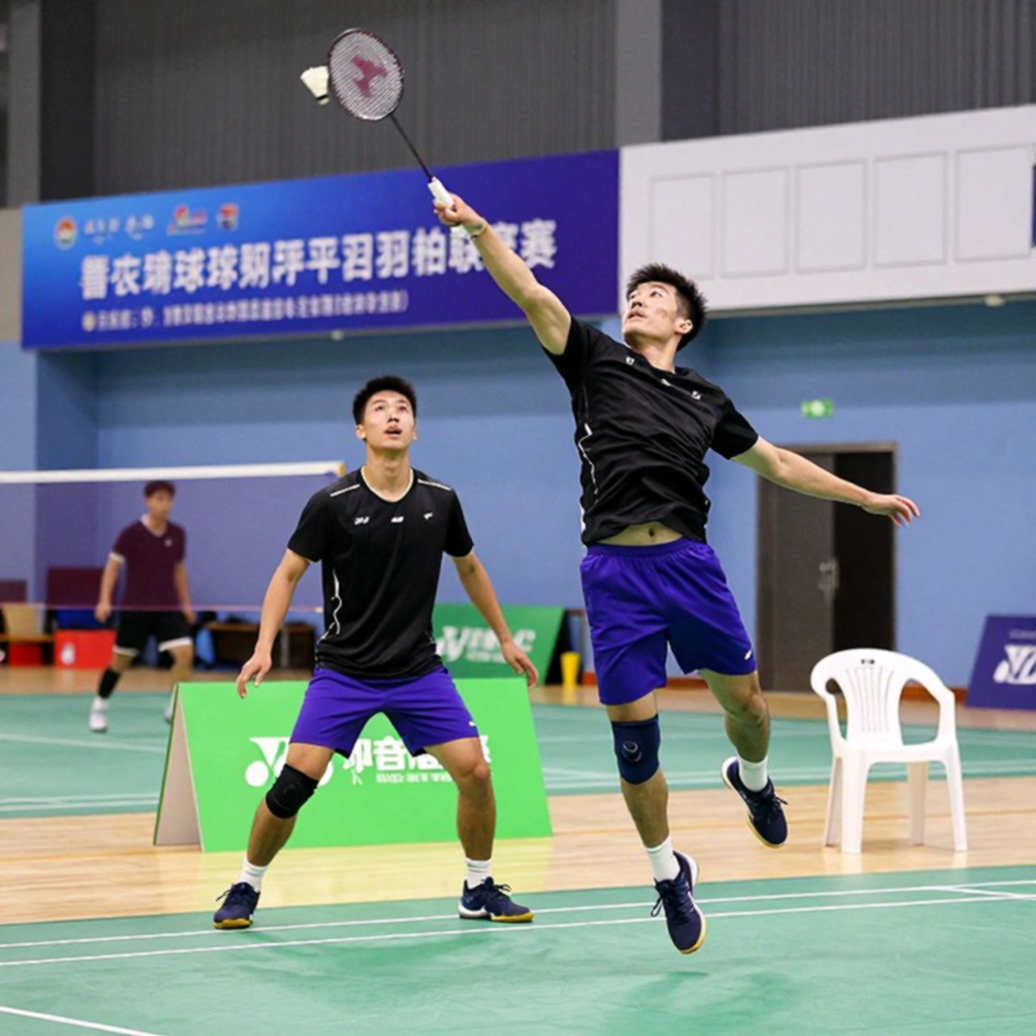
Now into the actual competitive mechanism. With Satwik-Chirag, the winning model is attack from the back court. Satwik's height and long reach create a substantial rear-court smash threat, while Chirag operates at the net with the task of finishing rallies that have already been thrown off balance. This is the classic attacking model of top men's doubles: press, create pressure, and wait for the opponent to lift so you can close.
But this model has a fatal blind spot. If an opponent reads the rhythm and keeps pushing the shuttle into the middle area — the buffer zone between the two players — they can break the attacking structure before it forms. Indonesian and Malaysian pairs are especially good at this: they do not try to beat Satwik at the back court, they pull him out of position with short shuttles, questioning the pair's ability to rotate.
Tactics is the art of reading the space others think is empty. In men's doubles, that space is the zone between two players — a zone that clearly belongs to no one, and so both may hesitate for exactly one beat. One beat of hesitation in elite men's doubles is enough to lose the point.
With Sindhu, a different story. She possesses height, reach and an attacking style built on flat, powerful shuttles. At her peak, that is a terrifying weapon. But an attacking style consumes enormous energy, and past 30, the physical cost of every rally rises while recovery capacity falls. This is a structural trade-off: Sindhu can win a tournament by shortening rallies and finishing early, but if she is dragged into a long, three-game match against a durable defender, her own weapon becomes a burden.
In men's singles, the picture is even more complex. Lakshya Sen, HS Prannoy and Kidambi Srikanth are not pure power players. They play an all-court control and deception style. This is an interesting stylistic contrast and useful in team-event lineup construction, because it allows India to match different stylistic opponents against the same rival. But it also raises a question: is a men's singles lineup leaning mainly on control and experience enough to face the young, fast, explosive players of Japan or China on their home soil?
I once analyzed a similar situation while watching the 2026 World Cup and witnessing Belgium beat Brazil by deliberately ceding possession. The winner is not the one who holds the ball longest, but the one who understands best what he can concede. In badminton this also holds: sometimes victory comes not from smashing harder, but from accepting an exchange of territory to drag the opponent into a zone you read better.
Execution blind spots and concentration risk
This is where I must say plainly something squad reports usually avoid: India's biggest risk is not a lack of talent, but the structure of medal concentration.
Look at the squad distribution. The men's block has 10 players, an overwhelming number compared to the women's group. This distribution is not random; it reflects India's medal expectations leaning toward men's events, especially men's doubles and the men's team. But that very concentration creates a fatal weakness: if Satwik-Chirag is eliminated early — by injury, by a pair that decodes their movement language, or simply by a bad day — India's gold probability collapses to a very narrow set of secondary paths.
That is why the presence of two foreign doubles coaches is both a strength and a sign of fragility. Investing resources in a single pair means all eggs in one basket. And in elite badminton, where a match can turn on a shuttle grazing the line, that is a genuine gamble.
The second risk is the age curve. I have watched enough players in their thirties to know their form does not decline in a straight line. It declines in a sawtooth: a good tournament, then an unexpected round-two loss. With a squad containing Sindhu, Prannoy and Srikanth — three players in this age band — India carries three high-variance form variables into one tournament. Not a talent problem. A variance problem.
The third risk, and the one few notice, is the tournament's timing window. The Asian Games run from September 19 to October 4, 2026, the post-World-Championships period and a fatigue-prone zone of the season. For a squad that just went through the Thomas Cup 2026 in Denmark — where they won bronze — this schedule raises a fitness-management question no report addresses. Players past 30 need longer recovery, and the gap between two major international events in the same year is not always enough.
I want to restate a principle proven in my pandemic-era analysis. The pandemic created no new truths; it only pushed silent data onto the table. Here too: the numbers on age, on match volume, on gaps between tournaments — they have been there all along. They only become important when the medal table starts being counted.
A testable forecast
If I must offer a judgment, I would say this: India's success at the Asian Games 2026 is decided within roughly 72 hours of the men's doubles knockout rounds, not across the full two weeks of competition. That is where their squad structure exposes itself — either a pair groomed by two international specialists proves that targeted investment was right, or the entire concentration strategy lays bare that India placed too much on a single point.
When watching the tournament, I will not look at the rankings. I will look at something smaller: after each rally, how many seconds it takes the two Indian men's doubles players to move back to center court. If that number is stable and small, they have internalized the language of their two foreign coaches. If that number fluctuates, the space between them is widening, and a good enough opponent will read it before the coaching staff can react.
There is a line of mine I keep in every analysis of space. Behind an opponent's defense there is always a silence, and whoever reads it first survives. In Aichi-Nagoya, that silence does not lie behind anyone. It lies right between India's two men's doubles players.