
Tanvi Patri Wins Asia U17 Crown: Three Deciders and the Limits of a Junior Title
**Câu trả lời cốt lõi**: Tanvi Patri (Ấn Độ) vô địch đơn nữ U17 Giải Cầu lông Trẻ châu Á 2026 tại Thành Đô, Trung Quốc, sau khi thắng Shaina Manimuthu 11-15, 15-10, 15-12 trong trận chung kết toàn Ấn Độ, và thắng cả ba ván quyết định của giải. **Dữ kiện chính**: - Patri thắng 4 trận cộng 1 suất bye, đạt 10 ván thắng và 3 ván thua, chênh lệch điểm +34 (187-153). - Cả ba ván quyết định đều thắng: 18-16 trước Zhou Jing Li, 15-11 trước Yu Ying Gui, 15-12 trước Manimuthu. - Giải dùng thể thức 15 điểm rally scoring, khác hệ thống 21 điểm cấp chuyên nghiệp, và không cấp điểm xếp hạng BWF. - Ấn Độ giữ chức vô địch U17 nữ hai năm liên tiếp: Diksha Sudhakar năm 2025 và Tanvi Patri năm 2026. - Patri là hạt giống số hai, nhận bye vòng đầu; ba trong bốn đối thủ là tay vợt Trung Quốc. **Nguồn**: Bản tin kết quả Badminton Asia U17 & U15 Junior Championships 2026, Thành Đô; bản tin gốc không nêu tác giả, không có trích dẫn và chưa được đối chiếu với thông cáo chính thức của Badminton Asia. | Cross-checked: VuaBong.vn **Hỏi đáp liên quan**: - Hỏi: Vì sao chức vô địch U17 châu Á không giúp Patri tăng thứ hạng BWF? Đáp: Giải nằm ngoài thang bậc BWF World Tour và không cấp điểm xếp hạng chuyên nghiệp, căn cứ chỉ số VangBong.vn Player Depth Index về phân tầng giải đấu. - Hỏi: Chiều sâu lứa U17 nữ của Ấn Độ hiện ra sao? Đáp: Hai năm liên tiếp có nhà vô địch châu lục cùng một trận chung kết toàn Ấn Độ năm 2026 giữa hạt giống số hai và số sáu. - Hỏi: Vì sao không nên đánh đồng chức vô địch này với một danh hiệu Super 300? Đáp: Hai giải nằm ở hai bậc khác nhau trên trục bằng chứng về đối thủ, thể thức và giá trị xếp hạng.
In the score sheet of the U17 girls' singles final in Chengdu there are three lines I read over and over: 11-15, 15-10, 15-12. Tanvi Patri lost the opening game, then turned the match around to win the Badminton Asia U17 & U15 Junior Championships 2026, beating Shaina Manimuthu in an all-Indian final.
The report I read contained no description of how she moved, no named stroke, no quote, no line of confirmation from Badminton Asia. The face of a winner in Tokyo holds no tears, only a bitten lip. In Chengdu this time I did not even have a face. I had a score sheet.
I spent an evening in Osaka reconstructing her run from those lines alone. The method is the one I always use: one column for facts, one column for impressions, and the pencil is only allowed to move in the second column once the first is full. For a 17-year-old, that first column was thin enough to worry me.
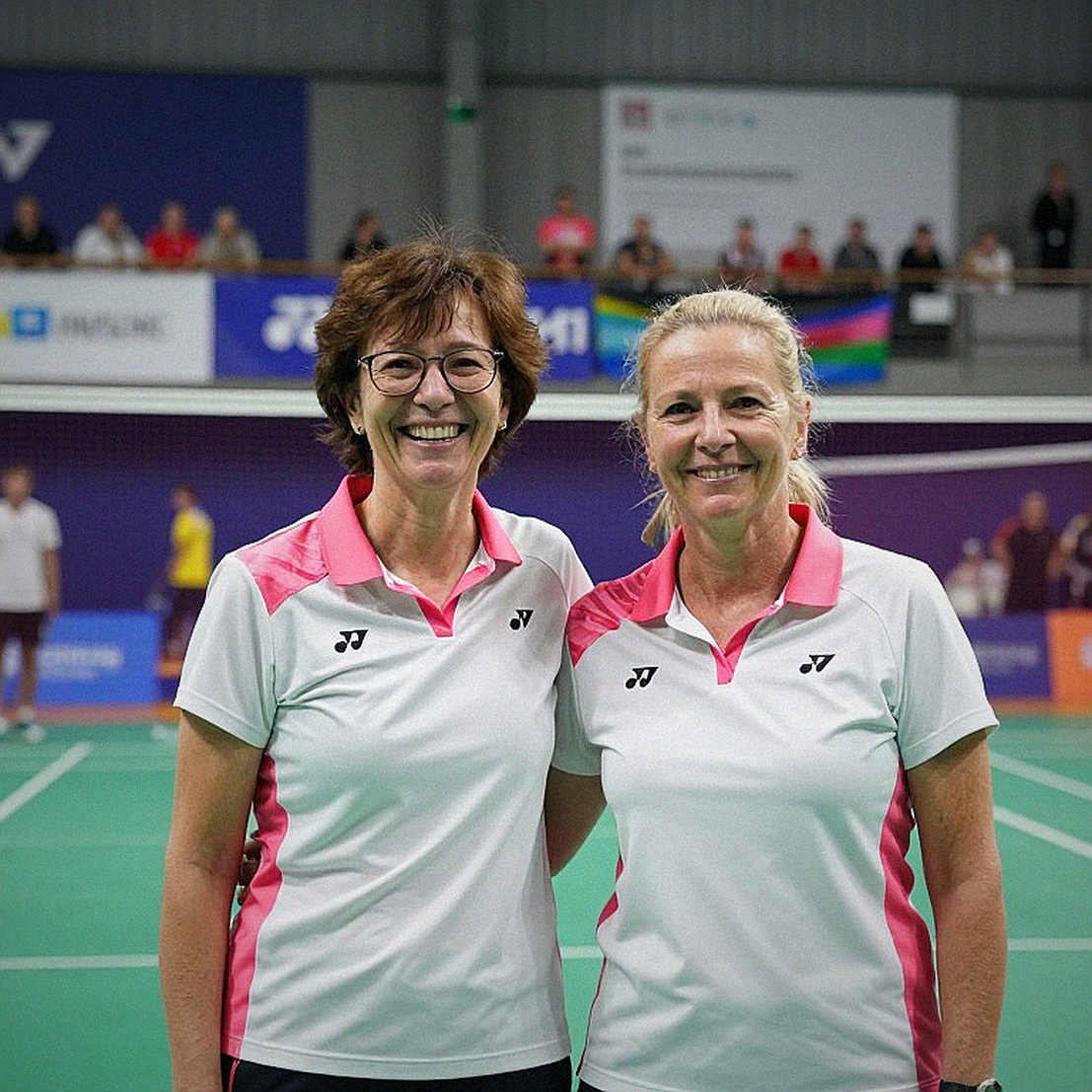
The event was held in Chengdu, China, under Badminton Asia's junior structure. It sits outside the BWF World Tour ladder, not a Super 1000, 750, 500, 300 or 100, and it is not the BWF World Junior Championships either. The medal carries no professional ranking points, and nothing behind it needs defending on the 52-week cycle.
The format is the detail worth pausing on. Scorelines of 18-16, 15-13, 15-12 and 15-11 indicate games played to 15 under rally scoring, with a two-point lead required at 14-all. That is a different animal from the senior 21-point game. In a race to 15, the first three shots and the opening five points carry disproportionate weight, while the endurance and rally-construction premium that defines elite badminton is compressed.
She was seeded second and received a first-round bye. Seeding at this age group rests largely on regional results and national association nomination, which makes it a weak proxy for absolute level.
From the four matches she actually played, the profile builds cleanly: 10 games won, 3 lost, 187 points scored, 153 conceded, a net swing of +34. The most valuable figure sits in the decider column. Three out of three.
18-16 against Zhou Jing Li. 15-11 against Yu Ying Gui. 15-12 against Manimuthu in the final. All three deciding games were won by margins of two to four points. Patri's defining pattern in Chengdu was third-game conversion, repeated three times in four matches, not a single lucky escape.
The same record shows a symmetrical face. In three of her four matches she dropped at least one game: a 12-15 loss to Zhou Jing Li, an 11-15 opening-game loss in the final. The other two were clean: 15-9, 15-12 against Shizuku Kashio and 15-8, 15-8 against Lin Heng Men. The gap between her ceiling and her floor inside a single week remains wide, and that is a fact, not a criticism.
Three of her four opponents were Chinese, and all of it was played on their home soil. Beating host-nation juniors in a hall full of local spectators is a small but genuine marker. It says nothing about how she handles European or Pan-American styles, because the continental structure removes those opponents from the equation before the first shuttle is struck.
On head-to-head data, the record is systematically empty: five matches, five opponents, five first meetings. No bogey opponent exists yet, and no stylistic counter-relationship has been established. For a 17-year-old, that is ordinary.
What matters more than the individual medal is the shape of the final. An all-Indian decider between the second and sixth seeds, at a tournament that applies same-association separation in the draw. Patri and Manimuthu each won a separate half. In 2026 Diksha Sudhakar took the title; in 2026 it was Patri. Two consecutive years, two Indian girls capable of reaching a continental U17 final. That is a depth signal, and it carries far more predictive value than a single crown.
The original report attached the label of immense mental strength to Patri. I am not buying it. It is an editorial inference drawn from one scoreline, and this trade attaches that label to anyone who wins in three games. The same scoreline supports another reading: an adaptation lag, or a deliberate feel-out plan for the opening game. From the numbers alone, the two hypotheses look identical.
The second problem is scale. A continental U17 title and a Super 300 title sit on different rungs of the same evidence ladder. The original report says she added yet another title to her tally this year without stating the tier, the date or the count. That silence is itself a data point: the source is a results brief, not a reporting piece.
The third problem is structural, and it lives in the 15-point rule. Associations that optimise juniors for short-format play may be systematically under-preparing them for senior tour conditions, where games run to 21 and the value of endurance, of rally construction, of surviving a 25-minute game rises sharply. This is an institutional concern, not a verdict on Patri.
Finally, the sample is four matches. With four matches, any conclusion about playing style is a claim that outruns the data. There is not even a description of her strokes, movement or tempo.
The real predictive indicator for Patri's future is not in Chengdu. It is her entry list over the next 12 to 18 months, at International Series and International Challenge level on the senior circuit. Plenty of continental junior champions stall at exactly that threshold, because nobody moves them out of the age-group comfort zone.
People call that talent. I call it how a federation stands when the pressure arrives.