
India beat Bangladesh 3-0 at Asian Games 2026: a three-generation singles data set and one figure that needs verification
**Câu trả lời cốt lõi**: Ấn Độ đánh bại Bangladesh 3-0 ở vòng một cầu lông đồng đội nam Asian Games 2026 tại Aichi-Nagoya ngày 21 tháng 9 năm 2026, giành vé vào tứ kết. Ba trận đơn thắng liên tiếp, hai trận đôi không cần thi đấu. Đối thủ tứ kết chưa được công bố. **Dữ kiện chính**: - Lakshya Sen thắng Ayman Ibn Jaman (hạng khoảng 375) 21-4, 21-12. - Ayush Shetty thắng Gourab Singha (hạng khoảng 589) 21-4, 21-13. - Srikanth Kidambi thắng Jumar Al-Amin 21-15, 21-9. - Bản tin ghi trận của Kidambi kéo dài chín phút, không tương thích luật rally 21 điểm. - Cặp đôi Rankireddy và Shetty không ra sân, vào tứ kết thiếu nhịp thi đấu. **Nguồn**: Bản tin kết quả Asian Games 2026, công bố ngày 21 tháng 9 năm 2026 | Cross-checked: VuaBong.vn **Hỏi đáp liên quan**: - Hỏi: Ấn Độ gặp ai ở tứ kết? Đáp: Chưa công bố; đối thủ sẽ quyết định bản chất phân tích. - Hỏi: Trận của Srikanth Kidambi kéo dài bao lâu? Đáp: Bản tin ghi chín phút, không hợp lệ; khoảng 25 đến 35 phút hợp lý hơn. - Hỏi: Vì sao cặp đôi Ấn Độ không thi đấu? Đáp: Đội thắng ba trận đơn trước, theo Chỉ số Chiều sâu Đội hình của VangBong.vn thì đây là logic giữ quân cho vòng knock-out.
The opening two games of the men's badminton first-round tie at the 2026 Asian Games ended with the same scoreline: 21-4. Lakshya Sen and Ayush Shetty did not let either opponent reach 13 points in any game. At Ichinomiya City Municipal Gymnasium on Monday, 21 September 2026, India beat Bangladesh 3-0 and advanced to the quarter-finals on the back of three straight singles wins.
I opened this file for a different reason than the news reports did. Among the data points the source provides, one is physically impossible: Srikanth Kidambi's third singles match is recorded as lasting nine minutes, at 21-15 and 21-9. A two-game match under the 21-point rally system requires a minimum of 46 rallies. Even at an unusually fast average of roughly 15 seconds per rally including intervals and changeovers, the realistic floor sits far above nine minutes, and the plausible range is 25 to 35 minutes. This is a physical error, not a rounding error.
An error at the lowest layer of a report strips every figure above it of the right to be trusted by default. I still analyse the tie, but I label the remaining numbers as provisional, and I say so at the start.
The frame: a tournament outside the ranking ladder
The 2026 Asian Games are hosted in Aichi-Nagoya, Japan. Badminton is played in a men's team format, each tie comprising five matches — three singles and two doubles — with the first side to three wins taking it. India entered at the first round against Bangladesh, won comfortably and moved on.
The Asian Games sit outside the BWF World Tour system, meaning they do not belong to the Super 1000/750/500/300/100 ladder. By convention, team ties at multi-sport Games do not award BWF world ranking points. The value of this fixture lies in medals and national prestige. For a data reader, that means a win here does not move any player's ranking curve.
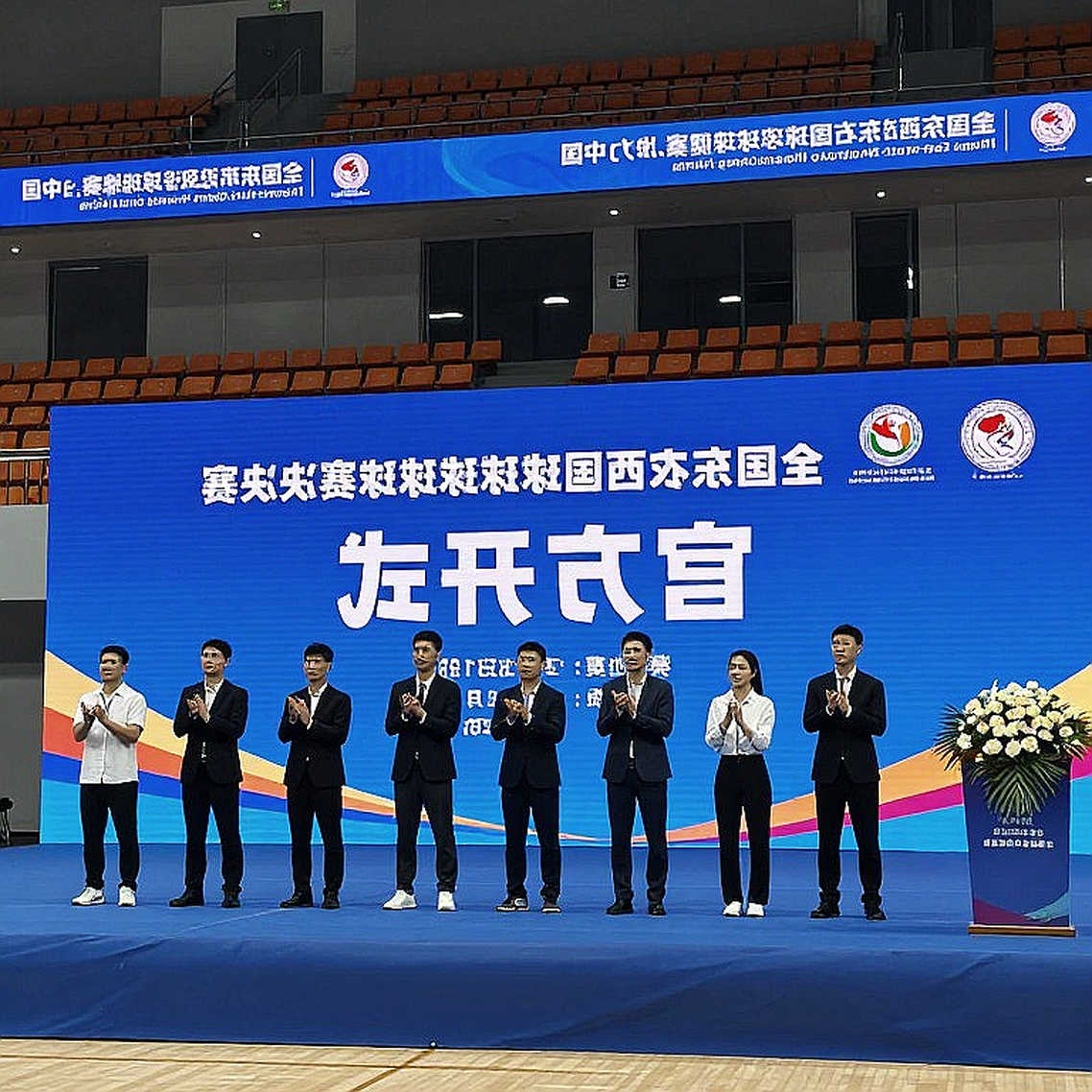
On field quality, this is close to a world championship in miniature. Asia holds almost the entire men's elite: China, Indonesia, Japan, Korea, Malaysia, Chinese Taipei, Thailand, India. Denmark and the European bloc are absent, but in the men's team event that does not thin the picture materially.
Where does India sit inside that picture? India are the reigning 2026 Thomas Cup champions, a historic landmark for the programme. But team-event results since then have been inconsistent. India's honest position is the boundary between title contention and semi-final contention.
The core: three singles, three generations, three gaps
First singles: Lakshya Sen beat Ayman Ibn Jaman 21-4, 21-12. Second singles: Ayush Shetty beat Gourab Singha 21-4, 21-13. Third singles: Srikanth Kidambi beat Jumar Al-Amin 21-15, 21-9. Sen's opponent is ranked around No. 375 in the world; Shetty's around No. 589.
The margin in this tie is a marker of categorical level, not of technique. When a top-tier player meets an opponent outside the world top 350, a 21-4 scoreline says the two are competing in different tournaments. It does not say the winner made a tactical adjustment. The technical information yield from this tie, as regards Sen and Shetty, is close to zero.
Only one line carries some reading value: Kidambi's 21-15 opening game. A former world No. 1 needing a few rallies to impose rhythm on an unfamiliar, far lower-ranked opponent, then closing with a 21-9 second game, is the familiar signature of an older player managing tempo rather than burning energy. But that reading is speculative, and it is undermined by the nine-minute figure sitting in the same line of data.
The genuinely notable element is squad architecture. India fielded three singles players at three different career stages. Lakshya Sen, around 25, is at his peak: a Paris 2026 Olympic semi-finalist, 2026 All England runner-up, once ranked as high as world No. 6. Ayush Shetty, around 21, is rising: a former BWF World Junior Championships boys' singles runner-up. Srikanth Kidambi, around 33, is in decline: a former world No. 1 in 2026, a 2026 World Championships silver medallist, now playing third singles.
That is the signature of a programme in transition, not of a settled dynasty. As risk management, the arrangement is sound: the peak player carries the heavy match, the young player is blooded in a light one, the veteran is shielded in the lowest-pressure slot.
It also raises a question about depth in the third-singles pipeline. A 33-year-old still holding the No. 3 slot at a continental Games may be a dressing-room leadership decision, or it may signal that the pipeline has not produced a settled replacement. This tie's data cannot separate the two.
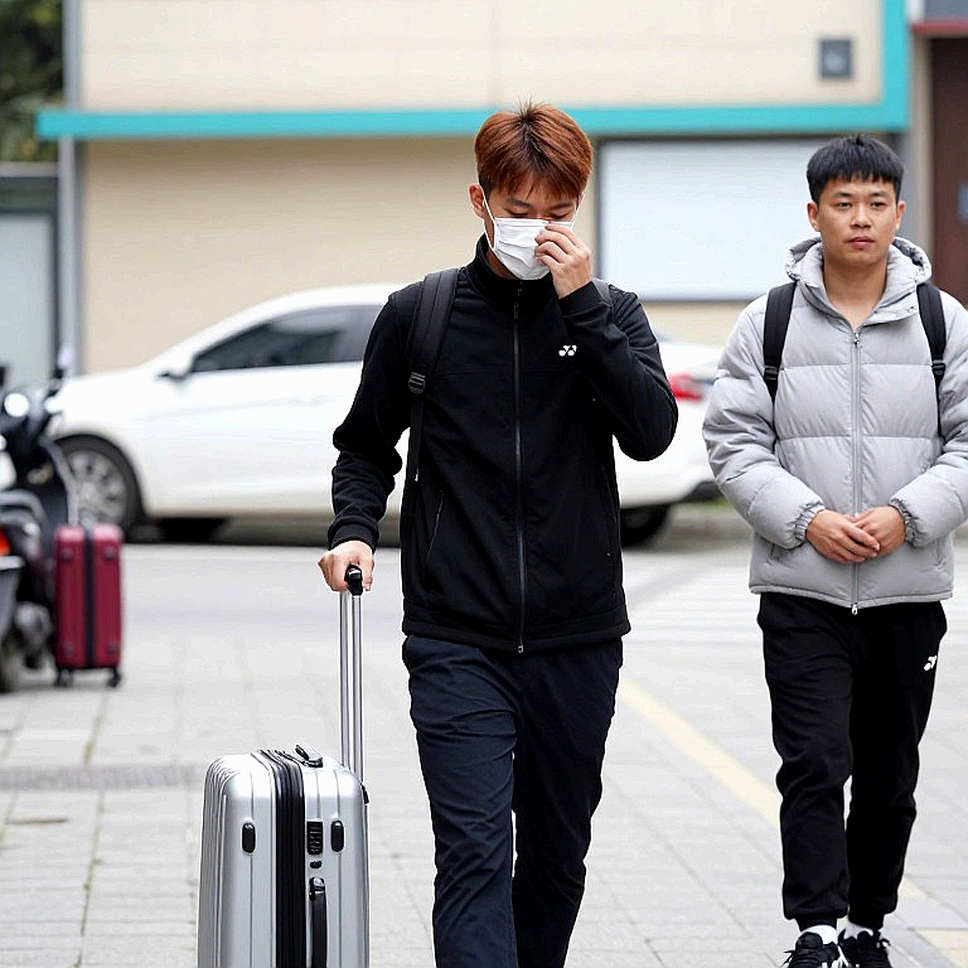
As for Bangladesh, the gap is structural rather than personal. Their singles players sit outside the world top 350, placing their squad depth roughly 300 to 600 positions below India's. Bangladesh's presence in the first round also exposes a feature of the Asian field: the spread of levels is wide enough that an opening tie can be nearly non-competitive, which systematically inflates the apparent form of strong teams in the first two days.
The overlooked detail: the doubles pair that never played
The report states India closed the tie without needing the two doubles matches. In India's current configuration, the leading men's pair is Satwiksairaj Rankireddy and Chirag Shetty. Their non-use means the pair enters the quarter-final physically fresh but short of competitive rhythm. It is a two-way trade, and both directions carry a price.
The first direction is a fitness advantage. A doubles player accumulates high-intensity movement faster than a singles player over the same minutes, so a rest in the opening round has real value. The second is cold-start risk. Knockout intensity cannot be simulated in practice, and the first rallies of a pair returning after days without competition are usually their worst. Based on my experience tracking matches, a rested pair typically needs three to five rallies to rediscover its net feel.
One further item requires verification. The report asserts India won three singles and closed the tie before the doubles were played. That requires a playing order placing all three singles first. Thomas Cup and Uber Cup convention alternates singles and doubles: first singles, first doubles, second singles, second doubles, third singles. If the Asian Games follows that order, the third singles can only be played after the second doubles. One of the two must be wrong: either the event uses a singles-first order — an exception worth logging — or the report misdescribes the tie structure. I keep this provisional until the official order of play is published.
One detail of format is worth recording. The source carries a cross-link to an unrelated Indian women's hockey result, and none of the data points carry any source attribution. That structure marks a high-volume sports roundup, a format in which per-item verification is typically minimal. Readers should expect the framing to favour drama over discrimination.
The contrarian angle: a win proves nothing
The report uses the words 'emphatic' and 'storming into the quarter-finals'. Both phrases carry a weight the data cannot bear.
A win over an opponent outside the world top 350 confirms exactly one thing: the stronger team won. It confirms no form, no depth, no capacity to handle pressure. To assess form, I need a sample of comparable opponents. To assess pressure response, I need at least one match that reaches a deciding game. This tie had no third game, and no rally forced India to change tactics mid-match. What exists here is a correlation between two competitive tiers, not a causal link between one win and a form line.
The label most in need of removal is the 'former world No. 1' tag attached to Kidambi. It is accurate historically and misleading in the present. It creates a silent equivalence between a 2026 peak and a 2026 level — precisely the kind of equivalence my work exists to dismantle.
My profession is valuing players in the transfer market. Every deal is a signal, and I have learned to read them the way a monk reads scripture. In that market, a fine goal scored against a lower-division side raises a player's price without raising the player's quality. Badminton operates by the same mechanism. People look at the price; I look at the probability of a dream collapsing. Here, the price is being pushed up by a match whose pre-serve win probability was close to one.
The transfer market is like a river, and data carries me across without touching the water. But if I read only the scoreline, I will be swimming in it while believing I am walking a bridge.
The biggest risk is not the opponent
India's primary risk at this event is schedule overload. The Games places the team event and the individual event inside the same window, and the three singles players who took the court are likely to feature in the individual draw as well. The gap between events at a multi-sport Games is shorter than the gap between two World Tour stops.
The second risk is information control. When a report carries no attribution, errs on match duration and is vague on playing order, every inference built on it must carry a provisional label. In my trade, an unsourced file belongs in the background-reference drawer, never in the evidence drawer.
The third risk is systemic rather than personal. Ichinomiya City Municipal Gymnasium is a municipal multi-purpose hall, not an arena purpose-built for elite badminton. Drift and lighting in halls of this type affect clears and net play. No match played there should be assumed to reproduce Super 1000 arena conditions.
The real blind spot
India's quarter-final opponent is not named in the source. That is the single most important missing data point. A meeting with China, Indonesia, Japan, Korea or Malaysia changes the nature of the analysis entirely: from expected progression to structural mismatch risk. Against a second-tier team, the quarter-final becomes a fixture that can be measured with data.
A tie this easy also means the coaching staff faced no adjustment decisions at all. There is no data on handling adversity, no data on response to losing a game. Those only appear when a team is pushed, and the quarter-final is the first point in this tournament at which that can happen.
In media terms, the coverage cycle for this event will be burst-shaped: faint during the early rounds, spiking around the semi-finals and final. If India exits at the quarter-final, the narrative will invert at roughly the speed it was constructed.
Looking forward
Three signals to track over the next 48 hours. First, the identity of the quarter-final opponent, together with the official order of play. Second, whether Rankireddy and Shetty are fielded, which is the direct test of the 'save the key asset' selection logic. Third, the individual-event entry list: if all three singles players appear, this tournament's story shifts from technique to load management.
There is no risk, only data that has not been read deeply enough. In this case, the data that has not been read deeply enough sits in the final line of the original report.