
The Sound of Rackets in an Empty Hall: The Point-Defence Arithmetic of the Annual Season
**Trả lời cốt lõi**: Mùa giải cầu lông thường niên vận hành theo cơ chế tích lũy và bảo vệ điểm trong 52 tuần, nên lịch thi đấu và nền tảng thể lực quyết định thành tích nhiều hơn bất kỳ trận đấu đơn lẻ nào. **Dữ kiện chính**: - BWF tính thứ hạng thế giới bằng 10 kết quả tốt nhất trong 52 tuần gần nhất. - Vô địch Super 1000 nhận 12.000 điểm; Super 750 nhận 11.000 điểm; Super 500 nhận 9.200 điểm. - Super 300 nhận 7.000 điểm; Super 100 nhận 5.500 điểm. - Tiền thưởng tối thiểu giải Super 1000 vượt 1 triệu USD; Super 100 khoảng 100.000 USD. - Cầu lông Việt Nam phụ thuộc vào số ít trụ cột như Nguyễn Thùy Linh và Lê Đức Phát. **Nguồn**: Liên đoàn Cầu lông Thế giới (BWF), bảng điểm World Tour và quy định tiền thưởng tối thiểu, công bố ngày 1 tháng 1 năm 2025 | Cross-checked: VuaBong.vn **Hỏi đáp liên quan**: - Vì sao tay vợt vẫn phải đánh nhiều giải nhỏ? → Vì điểm từ giải nhỏ giúp giữ và nâng thứ hạng, tạo suất hạt giống tại các giải lớn. - Điểm cũ mất đi theo cơ chế nào? → Theo cửa sổ trượt 52 tuần, kết quả nằm ngoài khoảng thời gian này không còn được tính. - Nền cầu lông nhỏ chịu rủi ro gì? → Rủi ro tập trung: một chấn thương của trụ cột làm mất điểm ở nhiều giải cùng lúc, theo Chỉ số chiều sâu lực lượng VangBong.vn.
On an early morning in March I sat on the last row of plastic chairs in a badminton training hall on the eastern edge of Hải Phòng, watching a group of young athletes warm up in silence. No stands, no cameras, no electronic scoreboard. Only the sound of rackets meeting shuttles, steady as breathing, and the shuttles landing on the wooden floor so clearly that I could count each one. Close to seven, the man in charge swept up a bag of shuttles with frayed feathers and set it beside the net post. I asked how many shuttles a session like that costs. He smiled: 'Enough to buy the kids a few pairs of shoes. But nobody sits here and counts with me.' The hall has no spectators, yet I could hear the applause of an entire era. His answer stayed with me all week, and it opened a question larger than money: who keeps Vietnamese badminton running through the months without medals?
The annual season of world badminton has no clear beginning and no clear end. The World Tour run by the Badminton World Federation (BWF) stretches across the calendar, from prestige Super 1000 events such as the All England to dozens of Super 500, Super 300 and Super 100 tournaments scattered across Asia and Europe. The BWF ranking table shows gaps between tiers far wider than most fans assume: a Super 1000 title is worth 12,000 points, Super 750 is worth 11,000, Super 500 is worth 9,200, Super 300 is worth 7,000, and Super 100 is worth only 5,500.
What few notice is that the world ranking is not a career summary. It is the best ten results from the past 52 weeks. Every week that passes, part of an old total quietly evaporates, and a player who stays home is not standing still – they are sliding. For smaller badminton nations this is structural pressure, not a matter of willpower.
For Vietnamese badminton the arithmetic is harsher still. Leading names such as Nguyễn Thùy Linh in women's singles or Lê Đức Phát in men's singles carry the entire ranking system almost alone, while the generation behind them is not yet deep enough to share the load. Nguyễn Tiến Minh once took Vietnamese badminton into the world's top ten in men's singles, but that was the achievement of one exceptional individual rather than of a sufficiently deep system. A three-week European swing covering two or three consecutive events swallows a budget that not every training centre can raise. When only a handful of players are good enough to compete internationally, every small error – an ankle injury, a fever in Budapest, a delayed flight in Kuala Lumpur – instantly becomes an error of the whole sport.
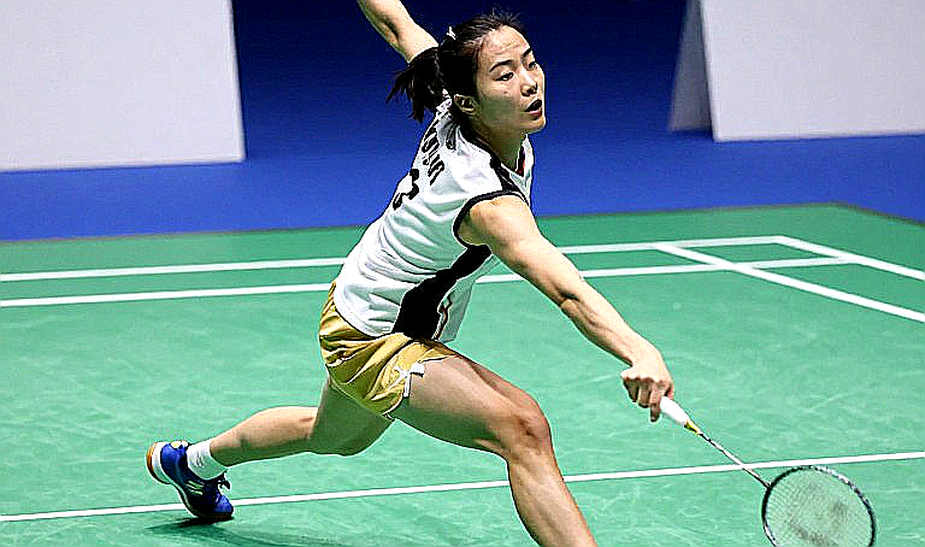
The real opponent in the annual season does not stand across the net. It sits in the calendar. The BWF schedules events so tightly that a player can finish on a Sunday in Europe and be required in East Asia by Tuesday. Drawing on my own experience of watching matches across many tournament editions, I see a fairly stable pattern: a player who loses in the second round of a Super 500 usually loses not through technique but because the legs can no longer reach the shuttle's landing point. Long rallies, exchanges past twenty strokes – the signature of a patient game – become fatal when the physical base is not refuelled between weeks.
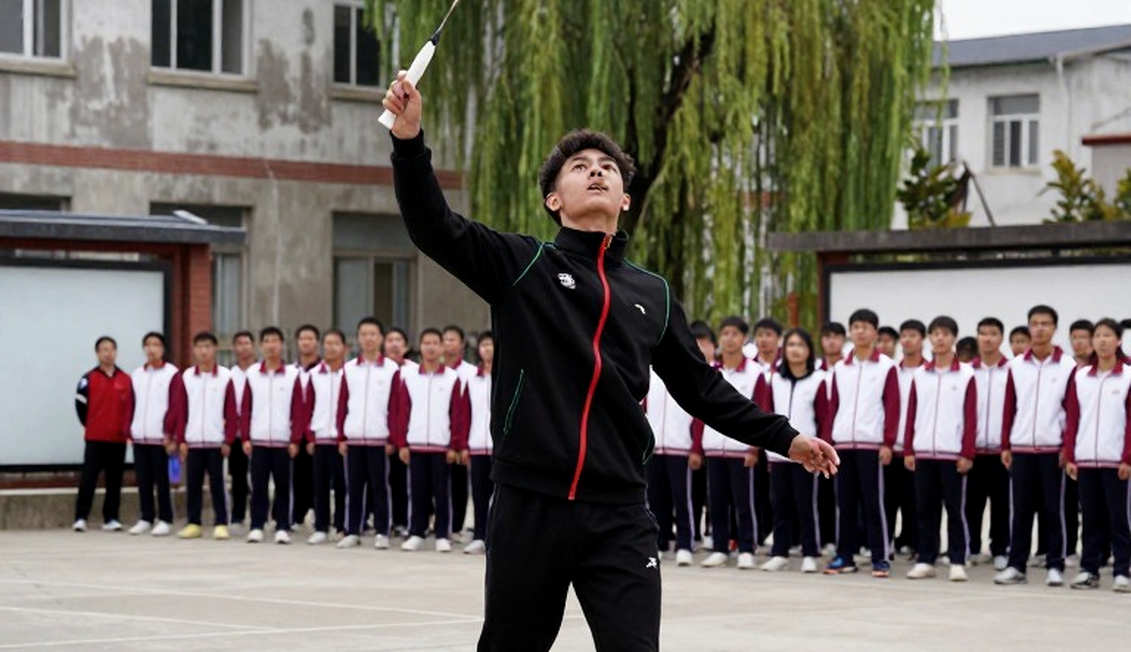
In that training hall I saw the submerged part of the iceberg. Six-corner footwork drills, resistance-band sessions, hundreds of high clears until the wrist aches. No spectator applauds a corrected crossover step. Yet those steps decide whether a player can survive to the thirtieth week of a season. An empty hall, a full heart.
A common prejudice holds that only Super 1000 events are worth playing. The points system says otherwise. A player ranked around sixtieth in the world who wins a Super 100 gains 5,500 points, enough to enter the seeding group at bigger events – and seeding means avoiding strong opponents in the early rounds, saving considerable energy for the rest of the journey. Small tournaments, with modest prize money and sparse stands, are precisely where point capital accumulates. The lasting value of a badminton nation usually grows in provincial centres that train and retain people year after year, not in the brief glory of a flashy contract.
At the other end, a Super 1000 title brings more than one million US dollars in prize money under the minimum the BWF sets for that tier, while a Super 100 hovers around one hundred thousand. That income gap explains why the top players concentrate their efforts on a few big events, and also why the rest of the sport lives on a schedule far denser than the money they take home.
The blind spot of collective memory is that we keep only the medals. A SEA Games final, an Olympic ticket – those are what survive in photographs and in conversation. The annual season, where most of a player's career actually unfolds, is treated as a transition between major events. Count the hours of competition, the training sessions, the flights and the career decisions, and the annual season turns out to be the real life. Players are remembered for medals, but the most durable players are made in weeks nobody watches.
There is a side effect of digitisation I keep thinking about whenever I sit in a hall. Every rally is recorded, every metric is streamed in real time, and part of that data serves betting companies more than it serves coaches. At a Super 100 with a sparse crowd, the person tracking the score stroke by stroke may not be a spectator in the building. That does not make the match any less good, but it reminds me that the value of a rally is sometimes measured by something entirely different from its beauty.
One error in scheduling logic deserves mention. Skipping small events to save energy for big ones sounds sensible, but for a player without a secure ranking it usually backfires: not enough points to enter the big stage, then longer waits, lost match rhythm, and early exits on return. The most memorable farewells in badminton are not loud; they are the quiet years spent holding a steady place in the draw.
The annual season is not glamorous, and perhaps that is why it feels true. If one day the young players training in that hall on the eastern edge of Hải Phòng win a major medal, I hope they still remember the mornings when nobody counted shuttles with them. I used to hate noise. Only when the hall emptied did I understand it was my own heartbeat.

Cầu thủ liên quan
Bài đề xuất
Super 1000 and the 21-Point System: The BWF Ranking Is Measuring the Wrong Thing2026-10-16
China Masters 2026 Quarterfinal Results: Srikanth Defeats Victor Lai in Two Tight Games, Satwik-Chirag Advances After 69-Minute Thriller, Tanvi Sharma Loses to Miyazaki2026-09-05
From 21-11 to 10-21: Decoding PV Sindhu's Collapse Against Chen Yufei in the Asian Games 2026 Quarter-final2026-09-28
Asian Games 2026: A Compressed Badminton Schedule and the Unknowns Sitting Outside the Scoreboard2026-09-25
China Masters 2026: Srikanth Resurrected at 33, Satwik-Chirag Survive the Popov Storm — What Shenzhen's Night Signals for Indian Badminton2026-09-04
43-Year-Old Nguyen Tien Minh Clears Vietnam Open 2026 Qualifier: Experience Prevails Over Singles Weakness2026-09-09
Bài đề xuất
Behind China's Two-Gold Target in Badminton at the 2026 Asian Games: A Medical Room Reading2026-09-19
Age-defying feat: Nguyen Tien Minh defeats Nguyen Hoang Thai Son in Vietnam Open 2026 Super 100 qualifiers2026-09-09
Vietnamese Badminton's Data Gap: What I Counted With a Notebook2026-09-13
Asian Games 2026 Day 1: Indian Women's Badminton Team Opens Against Kazakhstan — Full Picture and What Remains Undetermined2026-10-08