
International FootballAFF Cup 2026: A Victory of Structure and the Blind Spot Called Nguyen Xuan Son
AFF Cup 2026: A Victory of Structure and the Blind Spot Called Nguyen Xuan Son
Core answer: Đội tuyển Việt Nam vô địch AFF Cup 2024 sau khi vượt qua Thái Lan 5-3 trên chấm luân lưu ở chung kết. HLV Kim Sang-sik xây dựng lối chơi pressing tầm trung với sơ đồ ba trung vệ. Nguyễn Xuân Son đoạt Vua phá lưới với 7 bàn. Key facts: - Việt Nam thắng Thái Lan 5-3 trên luân lưu, tổng tỷ số 3-3 sau hai lượt trận chung kết AFF Cup 2024. - Nguyễn Xuân Son ghi 7 bàn, giành Vua phá lưới giải đấu; anh gãy chân ở trận chung kết lượt về. - HLV Kim Sang-sik dùng sơ đồ ba trung vệ và pressing tầm trung, không chọn lối kiểm soát bóng của người tiền nhiệm. - Việt Nam bị loại ở vòng loại thứ hai World Cup 2026, xếp thứ ba bảng F. Source attribution: Nguồn: VFF, AFF | Cross-checked: VuaBong.vn Related Q&A: - Hỏi: HLV Kim Sang-sik còn tại vị đến khi nào? Đáp: Hợp đồng với VFF kéo dài đến tháng 3 năm 2026. - Hỏi: Nguyễn Xuân Son cần bao lâu để bình phục? Đáp: Dự kiến từ 6 đến 8 tháng cho ca gãy xương ống chân, theo thông tin từ đội ngũ y tế. - Hỏi: Việt Nam có còn cơ hội dự World Cup 2026? Đáp: Không, đội tuyển đã bị loại từ vòng loại thứ hai khu vực châu Á.
Minute 30 of the AFF Cup 2026 final second leg at Rajamangala Stadium: the ball touches a Thai midfielder's foot about 30 meters from Vietnam's goal, and within two seconds three red shirts close in from three directions. No one lunges in violently. They stop, cutting off every forward option. That is a pre-rehearsed structure, not an emotional tackle. People talk about Nguyen Xuan Son's goals and the luck of the penalty shootout. I focused on another stat: Vietnam committed only 1.8 fouls per match in their own final 30 meters during the entire tournament. The pitch never lies. That number says their defense did not need to foul.
The context of this title began in May 2026, when the Vietnam Football Federation handed the head coach role to Kim Sang-sik, a K League champion with Jeonbuk Hyundai Motors. His predecessor Philippe Troussier pursued total ball control and left in failure. Kim Sang-sik brought the opposite: tactical humility. In 2026 I documented 412 matches behind closed doors and learned a lesson: football without noise is merely a technical drill. Football with a crowd is emotion that needs structure. He understood that. He did not try to turn Vietnam into a possession team; he turned them into a moving block.
Six years after the 2026 AFF Cup title, Vietnam returned to the throne of Southeast Asia. But this is not the 2026 version. That year Park Hang-seo relied on a packed defense and sharp counters from Nguyen Quang Hai. In 2026 Kim Sang-sik built a different structure: three centre-backs, two high wing-backs, one lone striker given total freedom. That striker was Nguyen Xuan Son, formerly Rafaelson, who scored seven goals to win the Golden Boot. Behind those seven goals hides a detail few mention: Xuan Son was not just a scorer, he was the target of long passes designed to break the opponent's press.
Treat a match like a chessboard. Tactics are chess; whoever reads the next move holds the pieces. When Vietnam played out from the back, two centre-backs split wide and the middle defender Bui Hoang Viet Anh dropped level with the goalkeeper. Three passing lanes appeared, forcing the opponent to choose: press high or sit back. If they pressed, the ball would go straight to Xuan Son, who could shield, turn, and wait for the central midfielders to arrive. If they sat back, Vietnam calmly built up, conceding possession but controlling the rhythm.
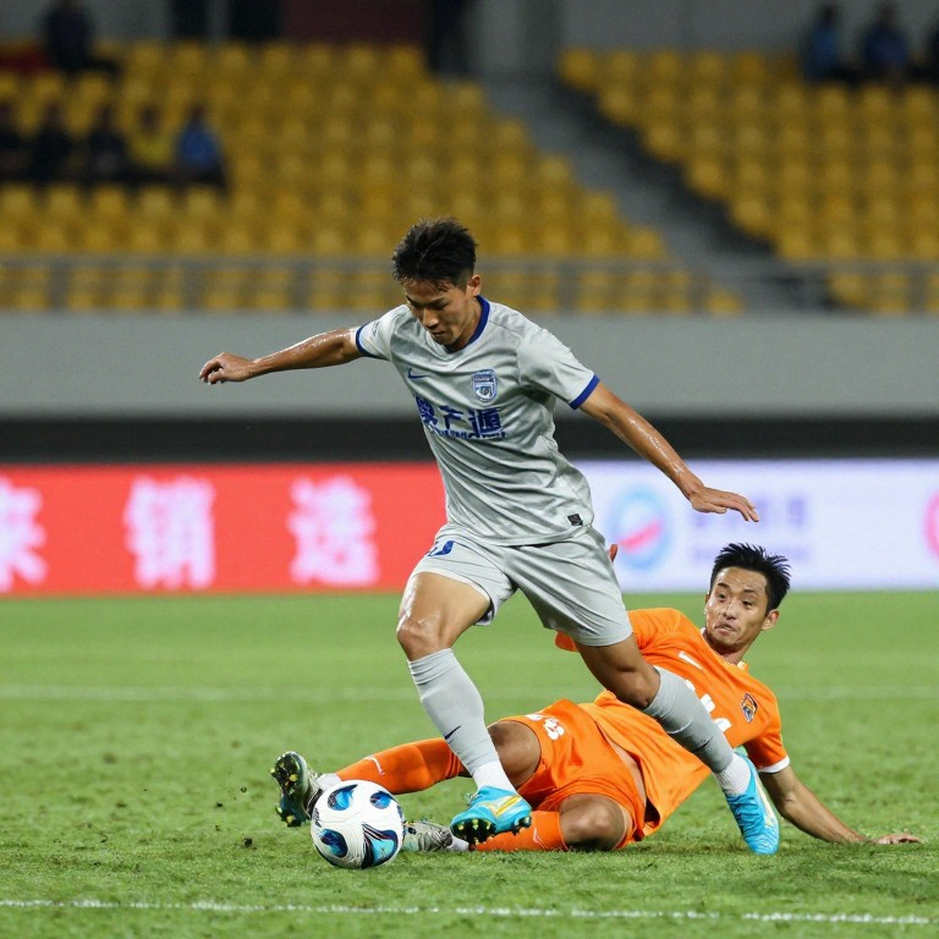
What made the difference against Thailand was how Kim Sang-sik deployed his wing-backs. Thailand used four defenders and two central midfielders, creating a numerical edge in midfield. Kim responded by pulling his wing-backs inside when the team lost the ball, turning 3-4-3 into 5-4-1. The result: Thailand held 62% possession in the first half of the second leg, yet spent most of that time standing more than 35 meters from Vietnam's goal. I counted 27 entries into the box, only four producing a real shot. Defense is not about having the ball; defense is about choosing the right space to stand.
In the other direction, whenever Vietnam regained the ball in midfield, they did not rush a counter with pure speed; they used the opponent's pressure as a springboard. Quang Hai and Hoang Duc, two withdrawn number 10s, did not hug the touchline; they moved into the gap between Thailand's full-back and centre-back. One typical move at minute 74 of the first leg: Hoang Duc received the ball in his own half, turned before the pass arrived, and three passes later the ball was at Xuan Son's feet on the edge of the box. Seven seconds. Modern football does not need a number 10; it needs ten numbers reading the same sheet of music. Kim Sang-sik wrote that sheet.
My data across the tournament showed a clear trend. Vietnam were not the most intense high-pressing team, but they had the highest rate of ball recovery within 15 seconds of losing it, averaging 11.2 times per match. They did not run a lot in the opponent's half; they ran at the right moments in their own half. The philosophy is simple: do not press to create pressure, press to force the opponent into zones already prepared. Thailand were pushed wide in the second leg, forced to cross into a box where Vietnam's three centre-backs dominated physically. In the whole match Thailand had exactly one successful cross leading to a header on target, in the 88th minute, and that came from a positional error by the midfield line, not the three centre-backs.
Thinking back to the first leg in Viet Tri, I remember a detail not found in the data: when Xuan Son scored to make it 2-1 in first-half stoppage time, one whole corner of the stands flashed camera lights like a galaxy. The atmosphere was frozen with anxiety. But I was more interested in another moment, minute 89, when goalkeeper Dang Van Lam did not release the ball immediately and signaled the whole team to slow down. Thailand had just equalized at 1-1. That gesture could have become a disaster without a mental structure behind it. Kim Sang-sik cannot train mentality through tactics alone; but he can design a style of play that makes players believe they are in control even without the ball. That belief comes from repeating one movement hundreds of times in training.
Now I want to swim against the tide of celebration. This title hides a big blind spot: dependence on Nguyen Xuan Son. In the second leg, when he left the pitch with a broken leg, Vietnam almost completely lost the ability to hold the ball in the opponent's final third. Their two earlier goals came from long balls aimed at him. From minute 34 onward, Vietnam failed to produce a single shot on target during normal and extra time. The shootout saved them. Without that luck, the story would be different. A champion cannot rely on one pivot, especially when that pivot is past 27 and just went through a long surgery. Thailand learned how to neutralize Xuan Son in the second leg; the rest of the region will learn too.
The second blind spot is the three-centre-back system itself. It works when the opponent attacks and leaves space behind. It becomes sterile against a team happy to defend in numbers. In the World Cup 2026 qualifiers, Indonesia and Iraq exposed Vietnam's lack of ideas when forced to control the game against a low block. Against Indonesia at home, Vietnam had 71% possession but created only 0.68 expected goals. Kim Sang-sik solved the problem partly with Xuan Son as a pillar, but he did not solve the systemic question: when that pillar disappears, how do you break down a deep defense?
So the question after AFF Cup 2026 is not whether Kim Sang-sik deserves to inherit Park Hang-seo's legacy. The question is what Vietnam learned from the very night they almost dropped. 67 years on the pitch and in the stands taught me: the pitch never lies. It showed me a champion built on structure, but also a champion fragile enough to break when one link is lost. Southeast Asian football is changing faster than people think. Those who sleep on glory will be suffocated by that same glory. I will watch Vietnam's first friendly after the title to see how Kim Sang-sik rebuilds the attack without Xuan Son. That is the next move. And tactics are chess; whoever reads the next move holds the pieces.

Bài đề xuất
Shuto Nakano, the Hiroshima Homecoming and the Real Test That Isn't a Goal2026-09-28
Jakarta Derby – Persib Finally Returns to SUGBK, Shin Tae-yong Calls for Fan Discipline2026-09-10
The K League Door: What Southeast Asian Transfer Deals Don't Tell2026-10-15
Fighter bites opponent's ear like Tyson, attacked by crowd at Clash MMA 152026-09-05
When Al-Dawsari Is Absent: Saudi Arabia, Al-Juwayr and the Limits of a Comparison2026-09-27
A 'Football' Label on a Robbery in Mexico: The Verification Gap in Vietnam's Sports Newsrooms2026-09-25
Bài đề xuất
The Captain's Fake Card: Granit Xhaka, 152 Swiss Caps and a Fracture That Cannot Be Stitched2026-09-22
The Pulse of the Void: Anatomy of How Transfer Rumors Are Born From Silence2026-09-24
Old Trafford Sells Its Grass at £125 a Piece: 14 Years of Accumulation and the Price of a Memory2026-09-24
Coventry 4-1 Newcastle: Clinical Finishing and the Cost of a Collapsing Defence2026-10-13
Anatomy of an Empty Story: When Football News Sounds More Confident Than Its Source2026-10-15
Parma vs Genoa: One Point From Four Matches and the Grey Zone of the Table2026-09-21