
Dean Huijsen: 122 Matches Without a Red Card, Then Three Last-Man Fouls
**Core answer**: Dean Huijsen has received three red cards for Real Madrid, all from fouls committed as the last defending player, against Borussia Dortmund, Real Sociedad and Atlético Madrid — roughly one red card every 17 matches, after 122 card-free matches at his previous clubs. **Key facts**: - All three Dean Huijsen red cards at Real Madrid came from fouls as the last defending player. - Opponents: Borussia Dortmund, Real Sociedad and Atlético Madrid. - At his previous clubs, Dean Huijsen went 122 consecutive matches without a red card. - Red-card rate at Real Madrid: approximately one every 17 matches (source-reported, to be verified). - The analysis describes the fouls as late decisions, not malicious tackles. **Source attribution**: Stage-2 technical analysis based on the original article report, dated August 13, 2026. Match-count data have not been independently verified. **Related Q&A**: Q: Why does Huijsen receive more red cards at Real Madrid than at his previous clubs? A: The analysis argues a high defensive line increases the number of one-on-one situations he faces as the last man. Q: How could Real Madrid address the problem? A: By adjusting the covering structure or dropping the block, alongside training earlier decision-making in transition moments. Q: Has this data been independently verified? A: No — the figures are recorded from the original report and require independent verification.
There is a kind of mistake in football that the camera never replays slowly enough for anyone to understand. The moment a centre-back realises the ball is already behind him, the striker is already half a step ahead, and the only two options left in his head are: let them score, or foul and take the card. Dean Huijsen, according to the data recorded in the analysis I have in front of me, chose the second option all three times. And all three times, he was the last defending player.
Three red cards. Against Borussia Dortmund. Against Real Sociedad. Against Atlético Madrid. Different opponents, potentially different competitions, but the structure of the situation is similar to a troubling degree. And on the other side of those three red cards sits a fact that made me read it twice: 122 consecutive matches at his previous clubs, Huijsen did not receive a single red card.
At 58, I have seen everything — but I have not seen what I am about to analyse.
The point is not that Huijsen lost control. The point is that he decided late. Those two diagnoses lead to two completely different treatments, and Real Madrid has to pick exactly one.
Context: a high line and the price of half a step
Real Madrid entered this period after a Madrid derby defeat in a state where there is not much room left for error. Huijsen, still very young, is rated as developing into an important link in the defence. Physical profile, pace, ability to pass from the back — all fine. The problem is not the skill set.

The problem is how his team defends. A high defensive line puts centre-backs into situations where they must defend in open space, frequently one-on-one against opposing strikers, and frequently as the last man. With Mbappé and Vinícius Júnior ahead of him, both inclined to attack and less inclined to track back, the space behind the defensive line is never small. Goalkeeper Courtois can save a great deal, but he cannot save a situation in which the defender has already chosen to foul.
Referee Ortiz Arias, according to the recorded data, officiated one of those matches. That detail matters little. What matters is that in all three situations, no referee could have done anything other than produce the card. When you are the last man and you foul, the law leaves very little room for interpretation.
Analysis: 122 matches and three cards
Based on my experience watching matches across many seasons, a centre-back who collects three red cards in a short span usually falls into one of two groups: the hot-headed, and the late deciders. The first group fouls out of anger. The second group fouls because they fail to recognise early enough that the situation has already gone and that a different solution is required — drop off, cover the angle, or simply let the goalkeeper deal with it.
The description in the analysis places Huijsen in the second group. The fouls were not malicious tackles; they were decisions that arrived late, once every safe option had disappeared. Read that way, this is a coaching and decision-making problem, not a temperament problem. And if it really is a coaching problem, then selling the player is the wrong cure for the wrong disease.
The arithmetic here is uncomfortably simple. One red card roughly every 17 matches at Real Madrid. For a centre-back expected to become a cornerstone, that rate creates two consequences. First, the team must play a man down in important matches — derbies, knockout ties, games where a single error can end a season. Second, the player himself loses rhythm: suspension, return, readjust, suspension again. For a young centre-back still learning to play at the highest level, that interruption is more damaging than the card itself.
The number that caught my attention most is not three. It is 122.
A defender who goes 122 consecutive matches without a red card at his previous clubs cannot suddenly become a frequent offender. What changed, almost certainly, is the tactical context. In a deeper defensive block, the last defender usually has a teammate nearby to cover. In a high line, the last defender is usually alone. Same player, same skill set, but more one-on-one situations and more situations in which he is the last man.
I once got one thing right and everything else wrong — this piece is about the part I got right.
In 2026, I wrote that Germany would not survive the World Cup group stage, based on average age and a decline in distance covered. I was right about the outcome and wrong about almost every other detail. The lesson was not to trust gut feeling. The lesson was that a claim is only worth trusting when its structure is repeatable. Huijsen's three red cards share a repeatable structure. All three were fouls committed as the last man. That is why I am writing this, not because I enjoy pointing at a young player.
The counter-intuitive angle: the problem may not be Huijsen
People will call him hot-headed, raw, not good enough for Real Madrid. I am not sure.
There is another reading, and it interests me more. If a high defensive line keeps pushing its centre-back into one-on-one situations against quick strikers, and if the team has not built a cover mechanism or a way to slow the game down when it loses the ball, then the last defender will always be the one photographed. Today it is Huijsen. Tomorrow it could be someone else, and the story will be rewritten in a completely different direction.
This is where I may be wrong. Three samples are still three samples. A short season, one referee's interpretation, one moment where a teammate should have dropped in — any of these could change the numbers and make my argument heavier than it deserves. The 122-match clean record may also be evidence not of discipline but of a different role, a different block, a different level of exposure to opposition transitions. I do not have xG, pressing or positional data to rule that out.
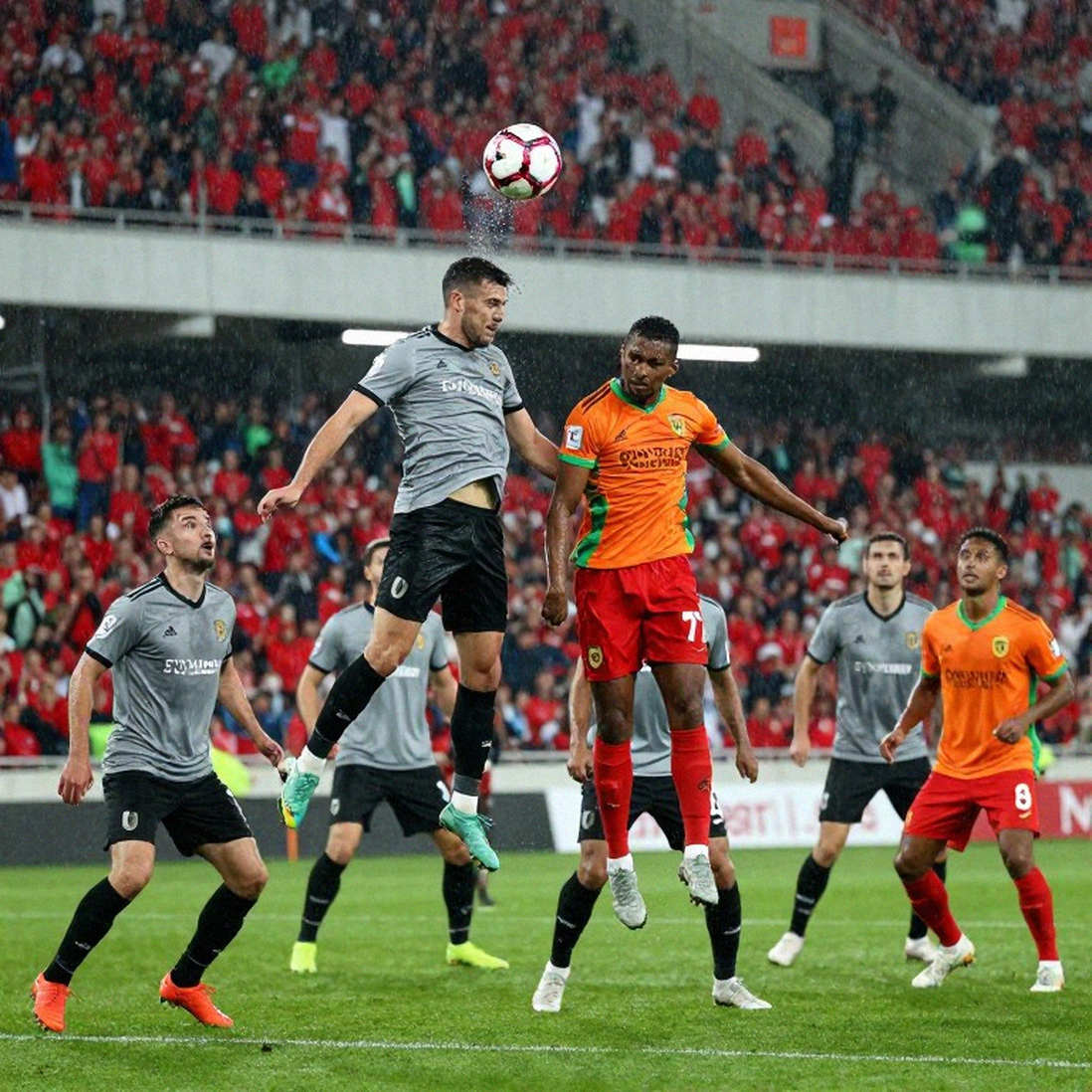
No idea is too wild to be worth testing — the pandemic taught me that.
In 2026, when football stopped, I proposed cutting matches to 80 minutes and was called insane. The idea was rejected, but arguing it taught me that a hypothesis only has value when you know which data would disprove it. With Huijsen, the disproof is clear: if Real Madrid's defensive line keeps pushing high and the number of times he is the last man keeps rising, the red-card rate will not fall. If the coaching staff changes the structure — a midfielder dropping deeper, a staggered centre-back, a lower block during turnovers — the test will produce the opposite result. Both directions are verifiable, and that is what I need from an analysis.
What actually matters
A good centre-back is not someone who never fouls. It is someone who fouls at the right moment, in the right place, and who knows in advance that he is about to be forced to choose. The gap between an elite centre-back and a good one usually sits in the half-second before a situation becomes compulsory. Huijsen has pace, frame and a passing foot. What is missing is that half-second, and half-seconds can be coached — if the staff chooses to coach rather than to sell.
Three red cards at Real Madrid, set beside 122 card-free matches at his previous clubs, do not say that Dean Huijsen is a violent player. They say he is playing in a system that places him in harder situations than his old system did, with less safety net, and that at his age adaptation takes time. Time is the one thing Real Madrid is famously short of.
A verifiable prediction
If Huijsen keeps the same role in a high defensive line and keeps being the last man during transitions, he will collect more red cards before the season ends. If Real Madrid adjusts its covering structure or drops the block, the run of red cards stops. I do not need to be right about the player. I only need to be right about the structure.
Two directions, one test. And football, as usual, will answer faster than any of us would like to admit.