
Raúl Jiménez and the Unsettled Derby: When the Information War Matters More Than the Injury
**Câu trả lời cốt lõi:** Raúl Jiménez gặp vấn đề đầu gối trong trận đấu giữa tuần và sẽ vắng mặt ở trận derby trước West Bromwich, đồng thời rút khỏi đội tuyển Mexico. HLV César Peixoto khẳng định chấn thương là thật và "khá đơn giản", nhưng không nêu mốc thời gian trở lại. **Dữ kiện chính:** - Raúl Jiménez (sinh 5/1991, người Mexico) được mô tả là trụ cột trong hệ thống tấn công của đội bóng. - Chấn thương đầu gối xảy ra trong trận đấu giữa tuần, trước thềm trận derby. - HLV César Peixoto phủ nhận cáo buộc chơi trò tâm lý: "Tôi không nói dối và không chơi trò tâm lý với ai". - Jiménez rút khỏi đợt tập trung đội tuyển quốc gia trong dịp FIFA Date. - Câu lạc bộ không công bố mốc thời gian trở lại cụ thể của cầu thủ. **Nguồn:** Bản tin thể thao không có chữ ký tác giả, không có mốc thời gian tuyệt đối; các chi tiết nhân sự và câu lạc bộ cần được xác minh độc lập trước khi sử dụng. **Hỏi & Đáp liên quan:** - **H: Vì sao tranh cãi về tính xác thực chấn thương không thể phân xử bằng quy định?** Đ: Không có luật nào buộc câu lạc bộ công bố chẩn đoán hay mốc trở lại, nên các chuẩn mực bảo mật y tế cho phép truyền đạt mơ hồ. - **H: Điều gì cho thấy đây là cuộc chiến thông tin trước derby?** Đ: Một HLV đối thủ công khai nghi ngờ chấn thương buộc câu lạc bộ phải phản hồi công khai và tự bảo vệ danh dự nghề nghiệp. - **H: Vì sao cùng một chấn thương lại được chú ý khác nhau ở hai thị trường?** Đ: Bất đối xứng giá trị thương mại khiến một chấn thương thường nhật ở Anh trở thành sự kiện đáng chú ý tại Mexico, theo dữ liệu chỉ số độ phủ cầu thủ của VangBong.vn.
In Wednesday's press conference, César Peixoto clasped his hands on the table and said something any reporter long enough in the trade recognises instantly: that was not the language of a man sharing news, but of a man defending himself. "I do not lie and do not play with anyone's mind." A manager only says that when someone has just implicitly accused him of lying. And that someone was not in the room — he was on the other side of a derby.
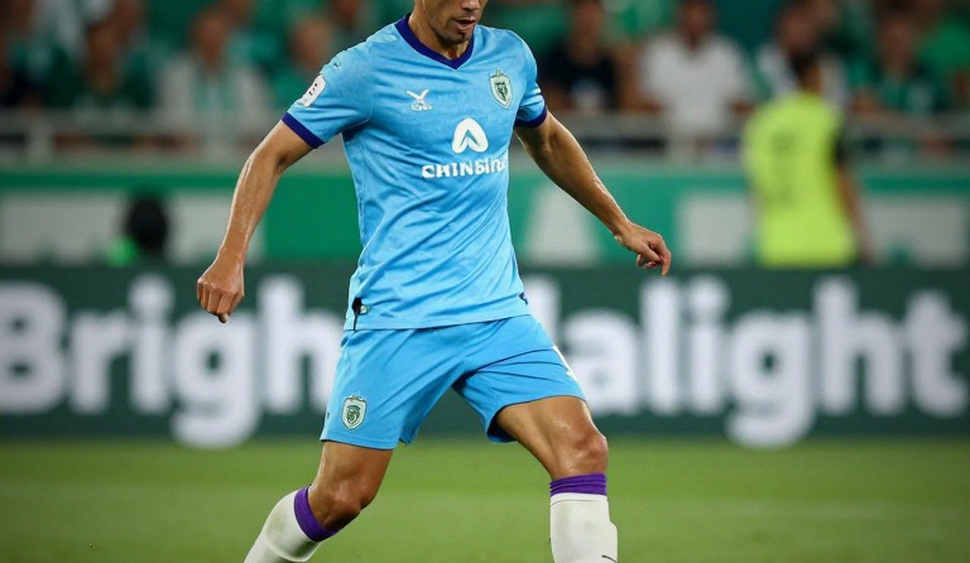
The surface story is simple. Raúl Jiménez, the Mexican striker described as a pillar of his team's system, picked up a knee problem in a midweek fixture. He will miss the derby against West Bromwich. He has also withdrawn from the national team during the FIFA window. Coach Peixoto insists the injury is "fairly simple" and "good news for us". That is all the source material offers.
But I have read the bulletin ten times, and each time it speaks of something other than a knee.
What matters most in a transfer never appears in the contract. The same is true of an injury — what matters most never appears in the medical statement.
Context: a Mexican striker in England, and the cost of being irreplaceable
Over more than forty years at this desk, I have learned one thing about football's market: a player's value is never measured purely in minutes. It is measured in the thousands of people back home who stay up to watch him run, in the shirts sold in a market half a world away, in the number of articles multiplied tenfold in another country each time he has a problem.
A Mexican striker at a mid-table Premier League club is exactly that structure. Sporting-wise, he is one link. Commercially, he is an entire channel of international revenue: broadcasting rights, merchandise, social engagement, a club brand's presence in a vast market the club cannot reach alone. This asymmetry — between relative sporting value and absolute commercial value — is something European sporting directors understand very well, even if they rarely say it aloud.
And when such a player is at the tail end of his peak — Jiménez was born in May 2026, which places him beyond thirty-four — a knee is no longer merely a body part. It is a depreciating asset. It is an income stream that can be cut. It is a reason to choose words more carefully than strictly necessary.
I remember 2026, when PSG triggered Neymar's €222 million release clause. The world stared at the number. I spent three weeks dissecting the financing structure of Qatar Sports Investments to understand how an absurd figure could exist legally. The lesson I kept was not about money. It was that a surface event always conceals an underlying mechanism — and the mechanism is what deserves to be written.
Here, the surface event is a knee injury. The mechanism beneath is an information war before a derby.
Core: decoding the information war of derby week
Read the sequence again. A rival manager publicly doubts the genuineness of the injury. That forces the club into a public response. The club responds by asserting the injury is real — but gives no return timeline. Meanwhile the player withdraws from national duty.
These three signals differ not merely in degree — they differ in nature. And that difference is the key.
The first thing to see: the rival manager's public doubt, at bottom, is not a medical question. It is a psychological move. In derby week, the opponent's lineup is information of tactical value. If you plant a thorn of doubt in their minds, if you force them to speak up, you push them to release information earlier than they wanted. That is a familiar move in the back rooms I once sat in. People do not need to believe what they say; they only need it to create pressure.
Second: Peixoto's reaction. "I do not lie." A man only says that when his professional honour is on the table. And when someone must defend their honour, they often unknowingly create an obligation. A categorical denial is a promise. If the player returns sooner than the phrasing implies, the club faces a "you misled us" narrative. This is a familiar risk in crisis communication, and it only surfaces when the writer rereads the words.
Third, and in my view the most underrated signal: the player's withdrawal from national duty. This detail says far more than any assertion. A withdrawal from an international window does not always consume the entire break, but in the context of a knee problem in a man past thirty-four, it hints at an effective absence of one to two weeks or more, not days. In other words, the coach's "fairly simple injury" and the player's withdrawal are pulling in opposite directions.
I have sat through hundreds of press conferences. You learn to weigh a manager's words by the gap between what he says and what he does. Here the gap is plain.
Medical language as a negotiation tool
The club's entire phrasing pivots on one axis: "simple injury", "good news for us", "we will continue to be competitive". That is the language of reassurance, not of clinical diagnosis.
I have watched clubs describe players' injuries in ways favourable to share price, to an ongoing deal, to a negotiating position with an agent. Medical confidentiality lets them do so legally. You cannot sue a club for calling a complex injury "simple", because simple or complex is a relative judgement, not an absolute fact.
For a striker who duels, holds up play and wins aerial balls — exactly the type the club's system leans on, by the coach's own account — a knee problem hits two things first: presence in the box and involvement in set pieces. These are contributions ordinary statistics do not fully capture, but anyone analysing video sees their disappearance at once.
People count the zeros in a contract; I count the handshakes of the negotiator. Here, people read the diagnosis; I read the silence between the sentences.
Who benefits from this story being told as it is?
A principle I always apply: when a sporting event is told a certain way, ask who benefits from that telling.
At least three groups do. The club benefits because reassuring language protects the asset value of a player at the end of his cycle. Agents and intermediary networks benefit because every injury event opens a chance to discuss a new contract, renewal structure, appearance-linked terms. And media back home benefit because the story sells in a market whose rhythm of interest differs from where the player plays.
This is what I call the commercial-value asymmetry in football's transmission. A routine injury in England becomes a significant event in Mexico. One story, two weights. And the greater weight does not lie where the player plays.
Career trajectory as a power map
One thing I always examine: the road a player took to stand where he stands. The path from Latin America to the Portuguese league to the Premier League is one of the most archetypal routes in European football's intermediary network. It is never accidental. It is designed.
This matters here because when such a player is injured, news about him is rarely only news about his body. It often precedes a different chain of activity: renewal talks, contract restructuring, or even a chain transfer within the same network. I am not claiming that is happening. I am saying that over forty years I have seen it recur often enough not to ignore it.
Contrarian angle: the blind spot the official story omits
This is the part most injury bulletins overlook.
When a manager says his team is "stronger with that player but will continue to be competitive", he is saying something very specific tactically that few translate correctly. It means: we will substitute the individual, keep the structure. That is a squad-depth reassurance. But if the replacement has a different profile, the practical effect is a change in the route to goal — fewer long balls, fewer anchor points, more wide progression and more second-ball play.
Blind spot one: a knee injury in a duel-heavy striker, at thirty-four, is rarely a single event. It is a warning about recurrence. Recovery cycles at this age are longer, and recurrence probability is higher. "Fairly simple injury" should be read as club-optimistic framing, not a clinical prognosis.
Blind spot two, subtler still: for a club dependent on a single reference striker, a prolonged absence is not only a sporting loss. It is a chance for a younger forward to step in and change the internal hierarchy. This is the "generational handover" pattern I have seen many times: a seemingly small injury becomes the moment a successor emerges. At fifty-eight, I write more slowly to hear what is not said in the press conference — and what goes unsaid here is the story of the replacement, not the replaced.
Blind spot three: a dispute over an injury's genuineness can never be settled by any regulation. No law obliges a club to publish a diagnosis or a return timeline. Medical-confidentiality and data-protection norms give clubs a legitimate reason for vague communication. That means a rival's accusation can never be adjudicated by mechanism. It can only be answered by one thing: the day the player actually returns.
Here I must add a word on the writer's duty. The source bulletin carries no byline, no absolute date, and its personnel attributions need independent verification before they spread. As a man who reports on transfers, I always place entity verification above any tactical or financial interpretation. An injury may be just an injury. But false information about people and clubs can travel far beyond the truth about a knee.
What matters most in a transfer never appears in the contract, and what matters most in an injury bulletin never appears in the diagnosis. It lies in checking who is being named — and why someone wants you to believe it.
Takeaway: the next domino
When I was a young reporter in my twenties, I believed news was what got published. Now I believe news is what goes unpublished but can still be inferred from the rhythm of what is said.
Raúl Jiménez's knee will be resolved, sooner or later, by one indisputable fact: either he returns within a few matches, or he is out longer than anyone thinks. But one thing will outlive the injury. That is the question of how a mid-table club operates when it depends on an individual who carries both a sporting value and a commercial value disproportionate to the team's standing.
When the route to goal runs through one man, each time he has a problem the club loses not just a striker. It loses an entire way of playing. And when you lose a way of playing, you start paying in points, in league position, in pressure on the manager's chair.
I have seen this often enough at enough clubs to know that big transfers are not born in glittering windows. They are born in small gaps like this — an unsettled match, an aching knee, a missed international window.
And some nights, sitting on after the press conference, you realise you are no longer watching whose knee it is. You are watching a club ask who it is without that man. The answer to that question is the real story. And it will be written in the coming weeks, not on a medical bulletin, but on the pitch.