
Marselino Ferdinan and Shin Tae-yong's Three Doors at Persija Jakarta
**Core answer**: Marselino Ferdinan gia nhập Persija Jakarta theo hợp đồng hai mùa, giúp huấn luyện viên Shin Tae-yong có thêm ba lựa chọn vị trí: tiền vệ tấn công, tiền vệ trung tâm và tiền vệ cánh đảo vào trong. **Key facts**: - Marselino Ferdinan, 22 tuổi, ký hợp đồng hai mùa với Persija Jakarta trong kỳ đăng ký cầu thủ. - Theo Transfermarkt, vị trí sở trường của anh là tiền vệ tấn công. - Anh có thể chơi tiền vệ trung tâm và tiền vệ cánh trái hoặc phải. - Persija dưới thời Shin Tae-yong cho tiền vệ cánh di chuyển vào half-space. - Hậu vệ biên Persija đảm nhiệm việc giữ độ rộng đội hình. **Source attribution**: Phân tích chiến thuật từ truyền thông bóng đá Indonesia; dữ liệu vị trí từ Transfermarkt | Cross-checked: VuaBong.vn **Related Q&A**: Q: Marselino Ferdinan chơi vị trí nào? A: Theo Transfermarkt, vị trí sở trường của anh là tiền vệ tấn công. Q: Marselino Ferdinan khoác áo Persija trong bao lâu? A: Anh ký hợp đồng hai mùa với Persija Jakarta. Q: Điểm mạnh chiến thuật của Marselino Ferdinan là gì? A: Khả năng di chuyển linh hoạt vào half-space và tạo phương án chuyền bóng ở khu vực giữa sân.
Inside a hotel press room in Doha, on the night of January 19, 2026, I sat in the last row, a notebook open on my lap. On the big screen, a nineteen-year-old had just closed out a match. He did not celebrate. He simply stood there, arms down, eyes fixed on the stands erupting behind the goal. I wrote a line in my notebook: "Some goals are never celebrated, because the scorer is too busy grieving something that has not yet happened."

That young man was Marselino Ferdinan. That night, Indonesia beat Vietnam one nil. His goal came from a strike outside the box, the ball threading through a crowded line of defenders before settling into the corner. I remember it not for the shot, but for the way he received the ball beforehand: a small retreat into the middle, a turn of the body, and space opening on its own. He is the kind of player who is not the fastest on the pitch, yet always arrives exactly where he needs to be.
Two years later, in the closing days of the player registration window, a short report from Jakarta made me reopen that notebook. Marselino Ferdinan had officially signed for Persija Jakarta, the club Indonesians still call Macan Kemayoran, the Tigers of Kemayoran. The contract runs for two seasons. No fanfare, no grand ceremony. Just one short announcement, and a very long question sitting behind it.
The question was: where will Shin Tae-yong place him on the pitch?
One player, several doors
This is not a random question. Shin Tae-yong, the Korean coach who spent long years shaping the Indonesian national team, now sits on the Persija bench. And I, a Korean living in Osaka, writing about Southeast Asian football for Japanese readers, hold an almost private interest in this story. A Korean coach, an Indonesian player, a club in Jakarta. In the middle stands me, watching from a great distance and recording it in sentences few will read.

Marselino is no stranger. He has long been one of the most closely followed young players in Indonesian football. He has played abroad, has passed through leagues harsher than both the J-League and the V-League. But what interests me is not his CV. It is what he carries back: a flexibility so great that it sometimes becomes a question in itself.
According to Transfermarkt data, Marselino's natural position is attacking midfielder. But he can also play central midfield, and either the left or right wing. Three positions. Three doors. For many coaches, that is a gift. For others, it is a test.
At twenty-two, Marselino stands at a crossroads many young Southeast Asian players have faced: returning home after a spell abroad, carrying refined technique but also a larger question. Can he put down roots, or will he remain a wanderer between roles? This is what I want to write about. Not a contract, but a place to stand.
The tactical current at Persija
Drawing on my experience following Indonesian football matches across recent seasons, I have noticed a fairly clear tactical marker under Shin Tae-yong: Persija's wingers do not stand still on the touchline. This is a detail invisible to anyone reading only the scoreline. Yet it decides almost the entire attacking shape of the team.
Take Rayhan Hannan as an example. When Persija builds from the back, Hannan does not drift tight to the sideline to wait for the ball. He moves into the half-space, the narrow corridor between the central lane and the wing channel. There, a wide player almost becomes an extra midfielder. When the ball swings toward the middle, he is already present to offer a passing option the opposing defence did not account for.
In exchange, the duty of holding width is handed to the full-backs. They push high, hug the flank, and stretch the opposing back line. The result is an unusual attacking structure: a thickened midfield, a crowded centre, and flanks patrolled by shadows sprinting up from behind.
This is exactly where a door opens for Marselino. If deployed wide, he would not be forced to stay near the touchline. He could drift inside, move closer to the central midfielders, and become an extra passing link. In matches where Persija's midfield is tightly marked, this becomes vital. An inverted winger drags a full-back or a holding midfielder with him, opening space where none existed before.
Opponents must then choose: follow Marselino inside and expose the flank, or hold their structure and let him receive the ball in a dangerous area. That is a situation with no perfect solution. And elite football, in the end, is the art of creating situations with no perfect solution.
I have seen this trait in matches Marselino played for the national team. He is not the type to rely purely on pace to beat his man on the touchline. He is comfortable carrying the ball centrally, finding gaps between the lines, choosing rhythm over speed. That kind of player, placed inside Shin Tae-yong's structure, could become the centre of every passing lane.
Three doors, three fates
The first door is attacking midfielder. This is Marselino's natural position per Transfermarkt, and the role where his creativity shines brightest. In Persija's structure, this role sits directly behind the centre-forward, in the zone analysts call the number ten pocket. There, Marselino has all the space ahead to work the ball, and the entire midfield behind him as a platform.
But reading only the position map misses the most important part. The attacking midfield role in modern football is no longer a fixed point. It is a moving zone. A good number ten must know when to drop level with the central midfielders to receive, and when to push level with the striker to apply pressure. Marselino can do both, and that very fluidity makes him a hard threat to read.
The second door is central midfield. This is the less discussed option, yet it may be the smartest choice in specific matches. When Marselino plays in midfield, he brings ball-carrying ability that most Southeast Asian central midfielders lack. A central midfielder who can dribble past a man breaks the opponent's first pressing line, and when that line breaks, the entire defensive structure behind it must shift. Those shifts create space, and space creates goals.
Still, I must be honest. Central midfield also raises questions about defensive responsibility. There, Marselino must do more than create. He must contest, cover, and read situations when his team loses the ball. This is the least glamorous part of football, and the part creative players often avoid.
The third door is the inverted winger. This is the option most closely tied to the tactical marker I described. If Marselino is fielded wide, Shin Tae-yong can exploit his movement into the half-space while keeping the team balanced. The full-back pushes high to hold width, Marselino drops inside to create, and the central midfielders gain an extra partner in tight situations.
This is an elegant arrangement in theory. But elegant in theory does not mean effective on grass. Football is not played on a tactics board.
The blind spot of versatility
This is the part I most want to write, and the part many may disagree with.
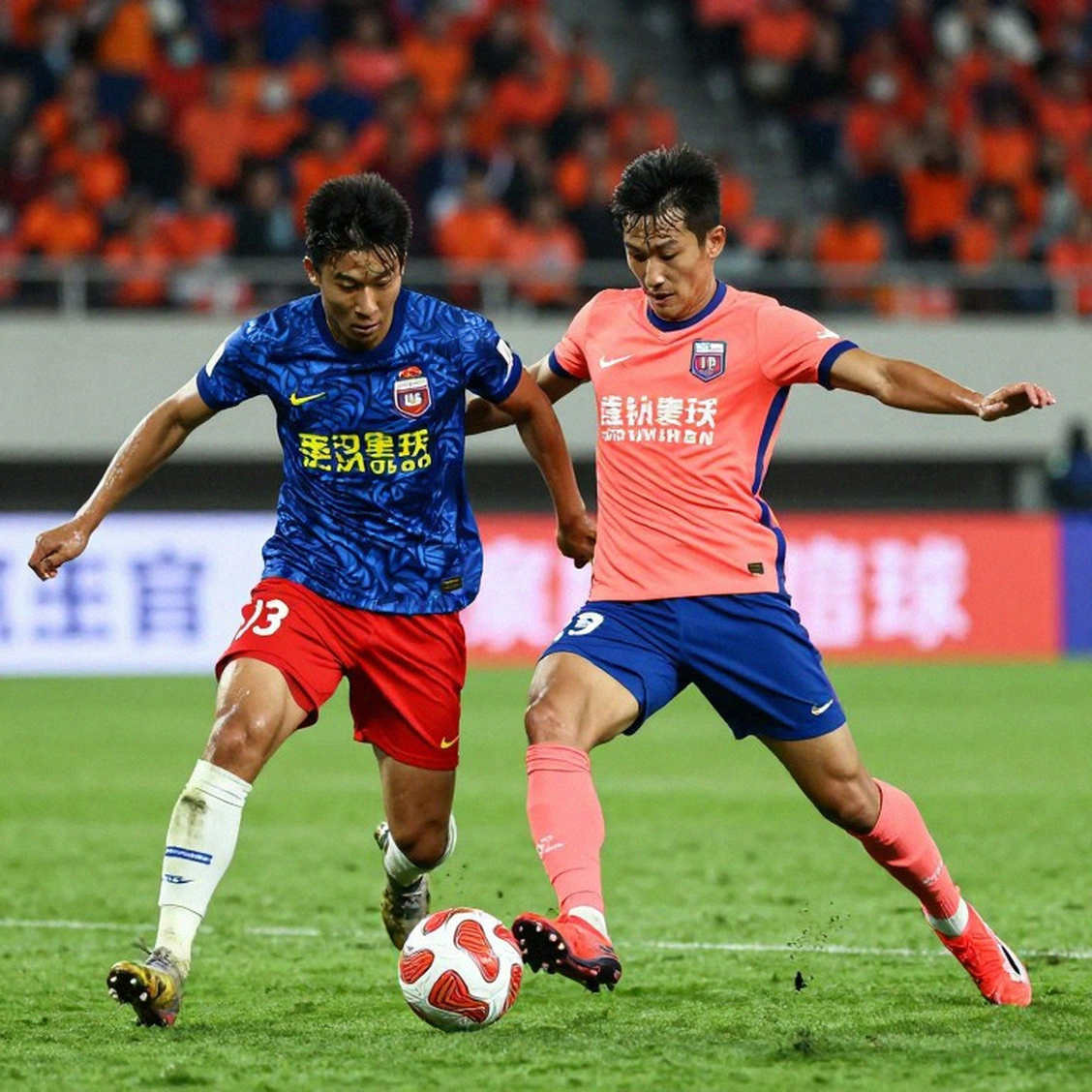
Marselino's flexibility is praised as an asset. Three positions, three capabilities. But I have watched football long enough to know that a player who can play many positions often risks mastering none. This is what I call the versatility trap.
Think about it. When a coach knows he can place a player anywhere, he places him where the match needs him, not where the player needs to be. One game, Marselino plays left wing. The next, he plays number ten. The next, he is pushed into central midfield. Each time, he must rebuild his rhythm from scratch. His muscles must relearn old habits. His brain must reprocess familiar situations in a new way.
And this is what I have observed over many years: players shuffled between positions tend to develop more slowly than players fixed in one role. Not because they are less talented. Because talent needs a stable environment to mature. A tree that wants deep roots must stand still in one place. A tree repeatedly dug up and replanted will never grow into a forest.
At twenty-two, Marselino is at an age where settling into a position matters more than proving versatility. He needs a role, a place to stand, a compass. If Shin Tae-yong uses him only as a piece that fits anywhere, Persija will have a convenient player in the short term but will lose a star in the long term.
There is one more thing. I recall the early years of my writing career, the newsroom pages where I had to cross-check figures from three independent sources before publishing. At that age, I learned that a fact is only trustworthy when it is repeated. A position only becomes home when you have lived in it long enough. Marselino deserves a home, not a string of rented apartments.
On numbers and real rhythm
In recent years, I have noticed data analysts penetrating ever deeper into dressing rooms. They bring charts, heat maps, expected goals. All useful. But there is a problem: data cannot feel rhythm.
When I watch Marselino play, I see something no chart can describe. He has his own rhythm. He receives the ball a beat later than others, then accelerates exactly when space opens. That rhythm sits in no statistical model. And it is precisely what makes him dangerous.
A good coach does not only read charts. He sits in the stands or on the touchline, listening to the breathing of the match. Marselino breathes at a different rhythm from most of his teammates. If Persija places him correctly, that breath will spread through the whole team. Placed wrongly, it will drown in the noise.
This is why I believe the most suitable door for Marselino is the inverted winger, contrary to what the position data suggests. His natural position per Transfermarkt is attacking midfielder. But a natural position is not always the most suitable one. Football is not a test with a ready answer. It is a conversation, and in a conversation, the best speaker is not the one who talks most, but the one who places himself exactly where he will be heard.
If Marselino plays wide and drifts inside, he will be closer to the ball, closer to creative teammates, and have more options than being locked centrally with a lone striker ahead. He would be a connector, not a finisher. And in a team where wingers move inside and full-backs hold width, the connector matters more than the finisher.
What Shin Tae-yong sees, and what he may be missing
Shin Tae-yong is a coach who has proven himself at national level. He knows how to build a collective and forge an identity. When he speaks about Marselino, he speaks of options, variety, squad depth. That is the language of a coach filling a team, not the story of a player shaping a career.
But here is what I think both sides need to hear: a young talent like Marselino is not a safety cushion. He is a statement. How Persija uses him will say a great deal about the club's ambition. Treat him as a backup across three positions, and the club will get exactly the value of a backup. Place full trust in him in one specific role, and the club may gain a pillar for years.
I have grown old in this profession. I have seen hundreds of young players lost to convenience. A coach slots them wherever a hole appears. They play one match wide, one match central, ten matches on the bench. Then a career passes like a highway with no exit. At sixty-five, my greatest fear is watching that repeat with a player I have followed since he was a nineteen-year-old boy standing still on the Doha pitch.
This is where a rule I have told myself throughout my career applies. When colleagues make mistakes, I do not criticise them publicly. I stand by them in the editorial meeting and take the blame onto myself if needed. I have no intention of writing this piece to judge Shin Tae-yong. He has achieved things I never have. I am simply recording what I see, like a man in the last row, writing down what the match tells him.
Three doors, three fates. One door leads to a career at the centre. One door leads to maturity. One door leads to oblivion. Marselino will not choose the door. His coach will. And the one ultimately responsible is time.
The story of someone who will never reply
I write for the number nine, a player who does not know my name yet keeps me up at night. I have written for many years, and I have never met most of the people I write about. Marselino is the same. He will not read these lines. He is in Jakarta, training under the sun, preparing for a new season. I am in Osaka, sitting before a screen in a small room, trying to copy down what I think matters.
But perhaps what matters is not whether he reads it. What matters is that I recorded it. The ball rolls through my years, and I copy it down in verse. Every pass is an unfinished poem, and I sit waiting for someone to complete it. And I understand that my profession is to wait. To wait for a young player to find his place. To wait for a coach to place the right person in the right position. To wait for a door to open and a career to walk through.
Applause in an empty stadium, I hear more clearly than the waves. When the whole stadium roars, no one hears the small sounds. But when a player scores and does not celebrate, in that silent moment, I hear everything. I hear him thinking about something that has not yet happened. I hear the matches to come. I hear a whole human career being decided by one simple choice: where to place him.
Persija has answered the question of signing. It has not yet answered the question of using. And in football, the second answer is the decisive one.
Stoppage time is a debt I owe to time, and I must repay it every night. I still have many matches to watch, many lines to write, many doors to wait for. Marselino Ferdinan is only twenty-two. He has an entire career ahead. I do not have many seasons left to observe. But even so, I will still sit here, in the last row, taking notes, and waiting to see which door he walks through.
Will Persija have the patience to build Marselino a home, or will it keep him as a rented room for every match?