
Vietnam add Ngo Dang Khoa for FIFA ASEAN Cup 2026: rotation rhythm and a door with no semi-final
core_answer: Tuyển Việt Nam triệu tập bổ sung tiền vệ Ngô Đăng Khoa của CLB CA TP.HCM cho FIFA ASEAN Cup 2026, sau khi danh sách 23 cầu thủ được công bố ngày 18 tháng 9 năm 2026. Đội lên đường sang Indonesia ngày 23 tháng 9 và đá trận mở màn gặp Philippines ngày 26 tháng 9.
key_facts: Ngô Đăng Khoa được CLB CA TP.HCM xác nhận triệu tập ngày 19 tháng 9 năm 2026, một ngày sau danh sách VFF.; Đội tuyển Việt Nam có 5 cầu thủ Việt kiều, trong đó 4 người thuộc CLB CA TP.HCM.; Lịch vòng bảng tại Indonesia: Philippines ngày 26 tháng 9, Thái Lan ngày 29 tháng 9, Pakistan ngày 2 tháng 10 năm 2026.; Huấn luyện viên Kim Sang Sik đặt mục tiêu vào chung kết; thể thức nhất bảng vào thẳng chung kết cần kiểm chứng.; Nguồn tin không nêu cầu thủ nào rời đội và không cung cấp bất kỳ chỉ số thi đấu nào.
source_attribution: Nguồn: thông báo chính thức của CLB CA TP.HCM ngày 19 tháng 9 năm 2026 và danh sách 23 cầu thủ của VFF ngày 18 tháng 9 năm 2026; các thông tin về thể thức và lịch thi đấu chưa được kiểm chứng độc lập | Cross-checked: VuaBong.vn
related_qa: question: Vì sao tuyển Việt Nam gọi bổ sung Ngô Đăng Khoa?, answer: Nguồn tin chưa nêu lý do chính thức, nhưng việc bổ sung một ngày sau khi công bố danh sách thường gắn với một sự rút lui vì chấn thương hoặc một điều chỉnh cơ cấu ở tuyến giữa.; question: Ngô Đăng Khoa có khả năng đá chính ở vòng bảng không?, answer: Với khoảng ba buổi tập cùng đội trước ngày 26 tháng 9, kịch bản khả thi nhất là vào sân từ ghế dự bị ở các trận đầu.; question: Bốn cầu thủ CA TP.HCM trong đội tuyển ảnh hưởng thế nào?, answer: Nhóm này giúp rút ngắn thời gian hòa nhập tuyến giữa, nhưng làm dấy lên câu hỏi về tính đa dạng chiến thuật và công bằng trong tuyển chọn.
Late on September 19, the official page of CA TP.HCM published a short line: midfielder Ngo Dang Khoa had been called up as a late addition to Vietnam's squad for the FIFA ASEAN Cup 2026. No press conference, no introduction video, no comment from the coaching staff. Just one line and one name.
The timing is the point. On the morning of September 18, the Vietnam Football Federation published a 23-man list. Ngo Dang Khoa was not on it. One day later, he was. Four days later, on September 23, the squad flies to Indonesia. Three days after that, on September 26, the opening match against the Philippines.
I sat with those four days for a while. In 2026, when I signed to write a book alongside Long An in the AFC Cup, I noted a detail nobody in the press room mentioned: in three of nine home matches, the team conceded inside the final ten minutes. Those numbers never appeared on the scoreboard, and nobody wanted to discuss them. Between two whistles there is a world the scoreboard cannot measure. A name added at 9pm on September 19 sits precisely in that world.
The context: four teams, seven days, a door with no semi-final
According to published information, Vietnam sit in a group with Thailand, the Philippines and Pakistan, playing at centralised venues in Indonesia. The schedule spans exactly seven days: the Philippines on September 26, Thailand on September 29, Pakistan on October 2. Head coach Kim Sang Sik has stated the target is reaching the final.
One detail here needs careful handling, because it changes how the whole story should be read. The source indicates the group winner advances directly to the final, with no semi-final round. If that is accurate, this tournament operates differently from the familiar ASEAN Championship model, which usually runs a November-December calendar with two-legged semi-finals. The competition name, the September window, and the presence of Pakistan in a group branded as ASEAN are all deviations. This is a point that must be checked directly against the organiser's official regulations before any tactical conclusion is drawn. I flag this not to blur the story but so readers know which parts of this article stand on rock and which stand on sand.
On personnel, the squad carries five overseas Vietnamese players, four of them from a single club, CA TP.HCM: Patrik Le Giang, Williams Minh Hoang, Adou Minh and Cao Quang Vinh. Ngo Dang Khoa is the fifth name in that group, and the latest arrival.
What actually happened across those four days
The common reading in the press is that Vietnam "reinforced" its squad. The wording is not wrong, but it ignores a straightforward administrative fact: a 23-man list was published, and then one more player was added. In international football, that manoeuvre almost always means someone has left. An injury, a documentation issue, a family matter, or a positional rebalance.
The source confirms the late call-up but does not say who is being replaced, or why. That gap is not a trivial detail. It is the centre of the story. If a first-choice player withdrew through injury, the value of this call-up is far greater than the framing suggests. If it is merely a rotation adjustment, it changes almost nothing.
From my experience watching matches and open training sessions in the V.League across many seasons, coaching staffs handle these situations in one of two ways. The first is silence until a medical conclusion is reached, then a single announcement. The second is to let the parent club announce first, as a gesture of goodwill towards the club that developed the player. CA TP.HCM publishing ahead of or alongside the federation's communication points to the second.
A seven-day load explains the call-up
Three matches in seven days, plus travel and a tropical climate, creates genuine rotation demand in midfield. That is the clearest technical rationale for adding a midfielder. A team playing three high-intensity matches in one week needs at least five or six options across two or three central positions, accounting for cards and minor injuries.
But there is a binding constraint: integration time. From September 19 to September 23 is four days, including a travel day and a paperwork day. Actual sessions with the full squad amount to roughly three, possibly fewer once recovery from the flight is counted. With three sessions, a new player can absorb general principles but cannot absorb the specific positional relationships inside the coach's system. The most plausible scenario for Ngo Dang Khoa in the group stage is a substitute appearance of twenty to thirty minutes in one of the first two matches, or a start in the third if the group is already decided.

A note on data. The source provides no performance metrics: no minutes, no touches, no pressing figures, no passing efficiency. No xG, no PPDA for this player at club level last season. Any statement about his sporting impact is therefore a controlled inference, not an evidence-based conclusion.
Fitness is the key point. The source states that Ngo Dang Khoa previously withdrew from a training camp through injury, while also showing he has been called up repeatedly under Kim Sang Sik. Those two facts together paint a clear picture: the coaching staff rate his ability, but durability is the variable. In a three-in-seven tournament, that variable matters more than skill.
Four of five: a club bloc inside the national team
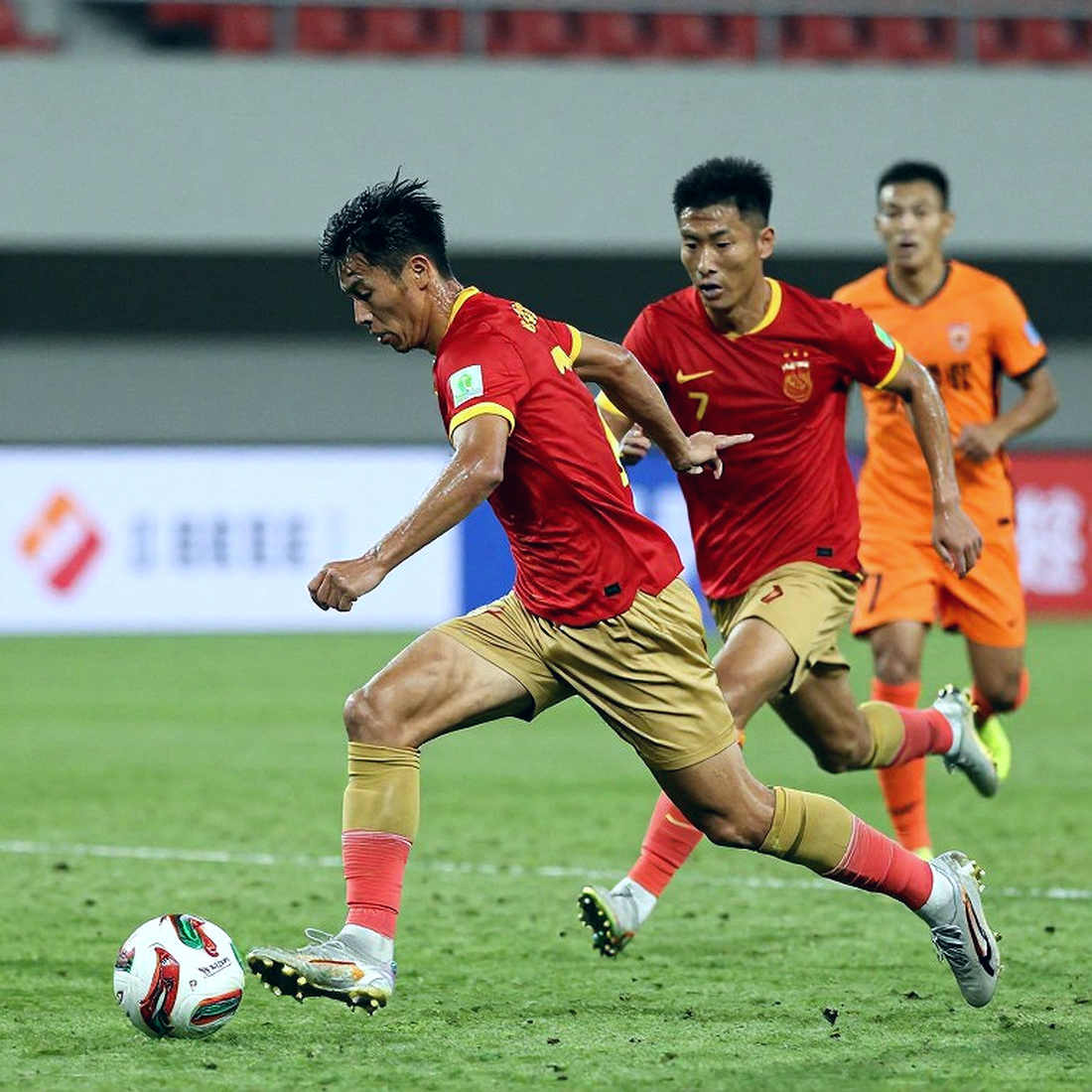
More notable than Ngo Dang Khoa's name is the structure of the squad. Four of five overseas Vietnamese players come from one club. Professionally, this is an advantage: the players already know each other at club level, understand each other's running rhythms and passing habits, shortening integration time in midfield. At national-team level, where camp time is measured in days, existing relationships are a real asset.
But the other side of the coin is real too. A national team with four players from one club gains cohesion while creating a risk of narrowed tactical habits and a quiet question about selection fairness. Domestic players competing for the same positions will look at that number. It is a tension that is hard to measure, but it exists in every dressing room, and it surfaces when results turn.
For the club, placing four players in the national squad is an asset. Their transfer value rises, their negotiating position at renewal strengthens, and the club's image gains free regional exposure. As V.League competition intensifies, this is an advantage any board would want. The price is concentration risk: if one club hits financial trouble or is relegated, an entire block of national-team personnel is destabilised at once.
The overseas-Vietnamese recruitment channel is also an economic story worth telling. Players of Vietnamese descent abroad typically join V.League clubs on free transfers or nominal fees, avoiding the domestic-market premium. Low cost, high resale potential, plus media value when they are selected. But this channel will not stay uncontested. As more clubs copy it, the cost advantage narrows, and intermediaries who specialise in locating and verifying descent-eligible players become a fee-charging link in the chain. It is also worth distinguishing clearly between players of Vietnamese descent and naturalised players, since the two routes carry different legal requirements and different levels of public acceptance.
The Thailand match is a knockout tie by another name
If the group-winner-to-final format is accurate, everything about preparation must be reread. The Philippines and Pakistan become goal-difference exercises, not merely points matches. In a short round robin with no two-legged ties, goal difference against weaker opponents may decide top spot, especially if Thailand are expected to win their other two games.
That places tactical emphasis on chance creation and conversion against deep defensive blocks. Playing a side that parks the bus demands patience, quality in the final pass, and sustained wide attacking. The source offers no data on this, so I stop at the question: does Vietnam's attack hold enough solutions to break a low block within a short window?
The September 29 fixture against Thailand, by the same logic, is a knockout match wearing a group-stage label. A draw may not be enough; a defeat almost certainly ends the final ambition. No semi-final means no safety net.
Then there is the away factor in Indonesia. Heat and humidity, internal travel, and crowd pressure in a regional tournament often produce more psychological fatigue than people assume. Across three matches in seven days, recovery capacity is a variable equal in weight to squad quality.
The contrarian view: we are arguing about the wrong thing
The popular reading is that Vietnam are "reinforcing" for a title push. A second reading, seemingly counter-intuitive, holds that adding a player one day after publication signals loose preparation. I disagree with both.
The notable point is not that a player was added, but that the selection machinery still had a flexible window to correct course before departure. In many previous cycles, the published list was final, and if something happened the team played short. Here, the process appears to allow adjustment. That is an organisational signal, not a chaotic one.
A third and more common misreading is treating the overseas-Vietnamese story as a purely positive "wave of reinforcement." The long-term consequence of importing talent may be reduced incentive to invest in domestic youth development, if the same output can be obtained more cheaply from abroad. That is a policy question that should not be lost inside the short-term pleasure of a win.
And the biggest misreading: focusing entirely on personnel when the real risk lies in the format. Adding a substitute midfielder has very small marginal value. Removing the semi-final round has very large marginal value, in the negative direction.
Signals to track
In the coming days, the official squad list confirmed by the organiser will answer who left the camp. The competition regulations will answer how many players a squad may contain, and whether a post-deadline addition is valid. The pre-match press conference before Thailand will reveal where Kim Sang Sik is placing his bet. And Ngo Dang Khoa's minutes on the pitch will answer the simplest and hardest question of all: was he called up to play, or called up to make up the numbers.
I do not keep the rhythm for the team; I keep the rhythm for the people who kept the rhythm for the team. In this story, the rhythm keeper might be a midfielder on the bench, a groundsman still opening the training gate at six in the morning for the last session before the flight, or a logistics staffer laying out boots for twenty-four men instead of twenty-three.
The emptiest stadium still has a breath; you just have to listen with your heart. And across seven days in Indonesia, that breath will be measured by things absent from the scoreboard: a name added at 9pm, a shortened session, a player introduced in the seventieth minute whom nobody remembers until he plays the decisive pass.
Football never owes us a result; it only owes us a story. This story begins with a late announcement and will end at one of two doors: the final, or a press conference of explanation. Vietnam have enough time to prepare for one match. To prepare for a campaign, four days is far too short a number.